Formentera 01 (2026) — An Ordinary Swim
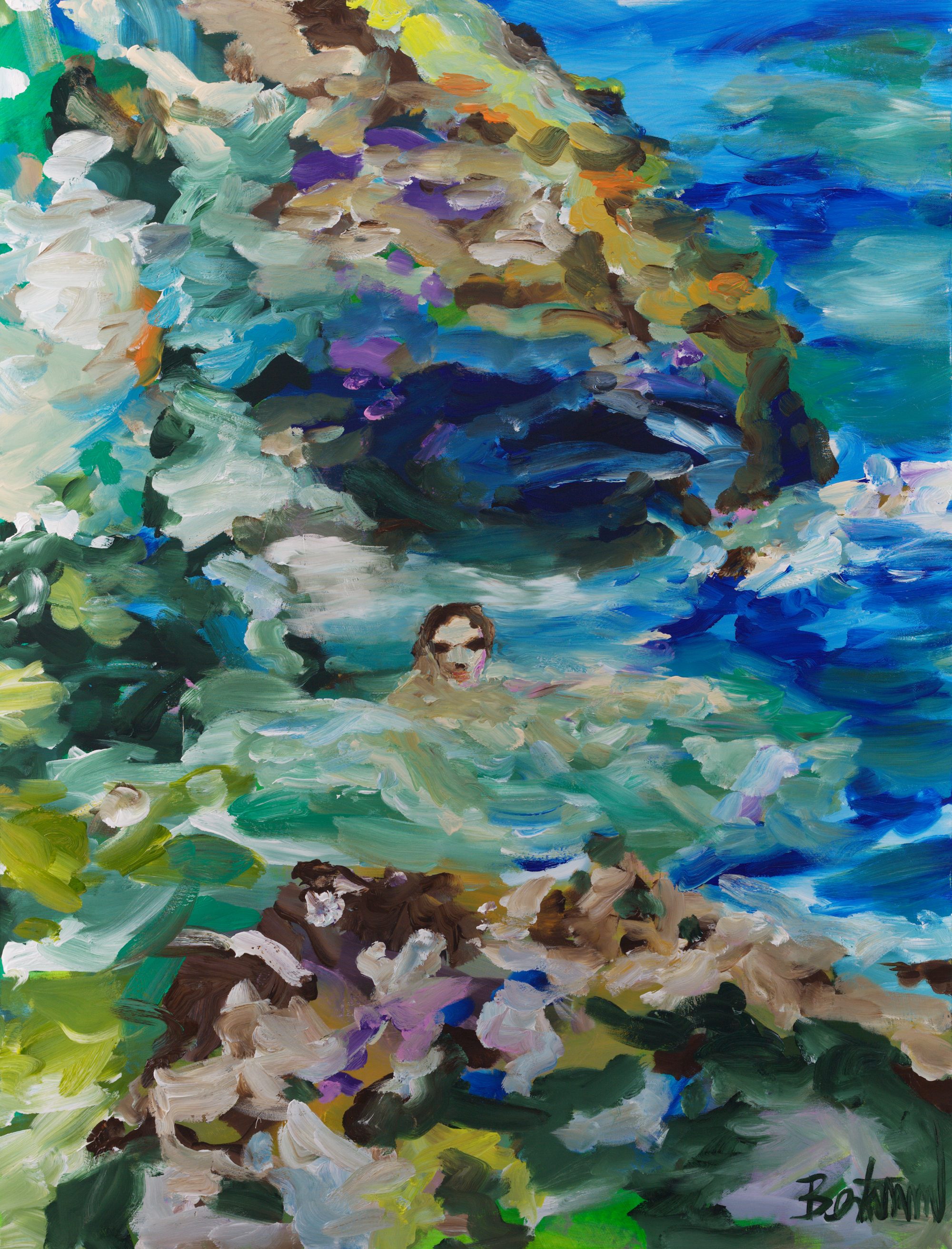
A swimmer crosses a small bay. The water is turquoise and cold-clear; the head and shoulders are above the surface, the rest already dissolving into the sea. Nothing else happens. Formentera 01 holds that single, undramatic moment — an ordinary swim on an ordinary afternoon — and treats it as worth two metres of canvas. It is an early painting of a new series, after Grimaud, and the same fast, wet-in-wet way of working.
An ordinary swim
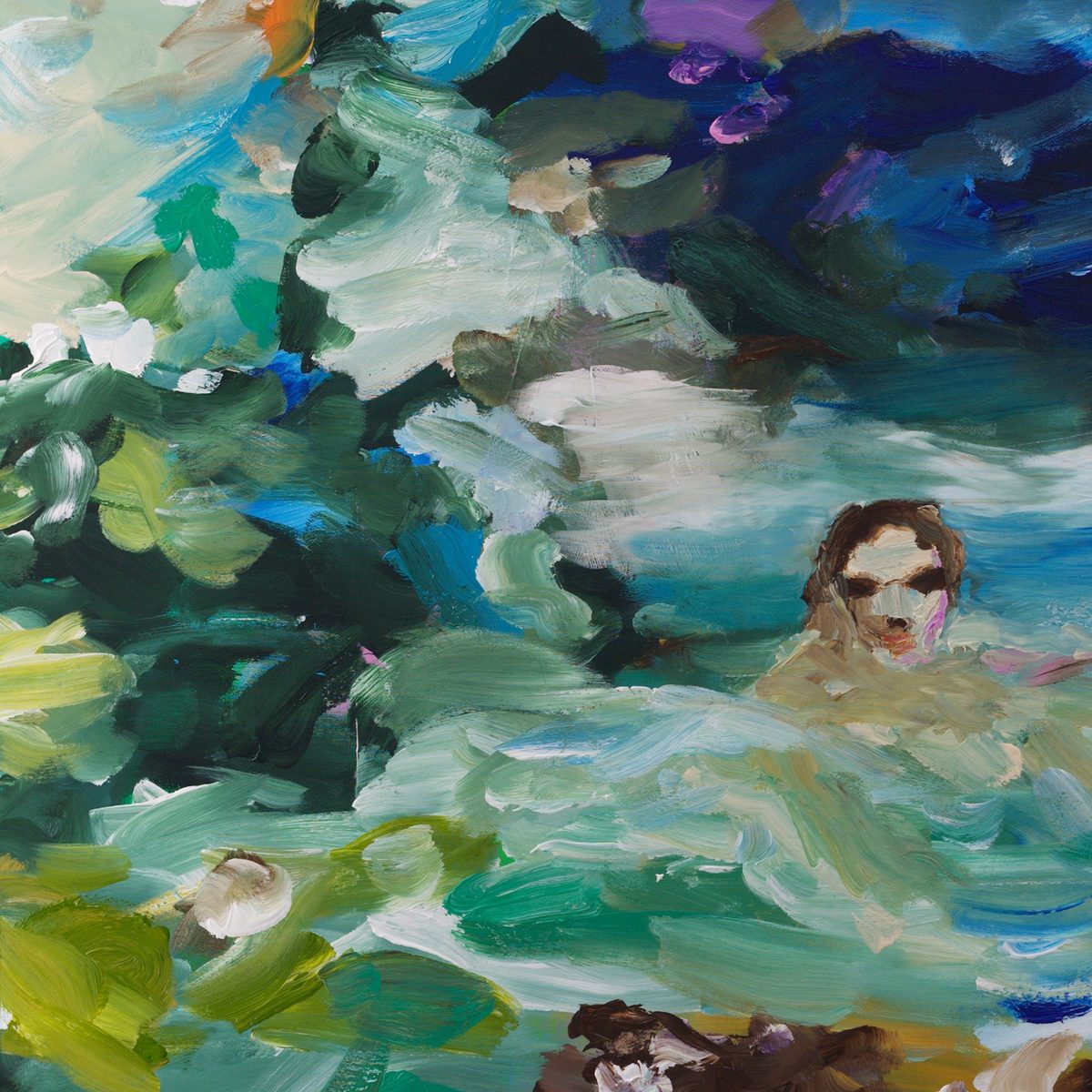
The bay is near Es Caló, on the eastern edge of Formentera — one of the small, sheltered coves where the rock drops straight into clear water. A lone swimmer moves through the centre of the picture, dark hair, face caught in a few strokes, the body half-gone into bands of teal, mint and cobalt. The painting tells no story and stages no drama. It presents a condition: the weightless, completely unremarkable pleasure of being in the sea. Who the swimmer is, where the day is going — the picture does not say, and does not need to.
A new way of painting: wet-in-wet
As in Grimaud, the roller and the oil-stick contour line of the earlier figurative work are gone. Here Claus Bertermann paints everything wet-in-wet, with large brushes, while the paint is still live — water, rock, foliage and figure laid down in one forward pass so that each colour bleeds into the next and the boundaries dissolve. The swimmer's body does not sit on top of the sea; it is made of the same wet paint and keeps merging back into it.
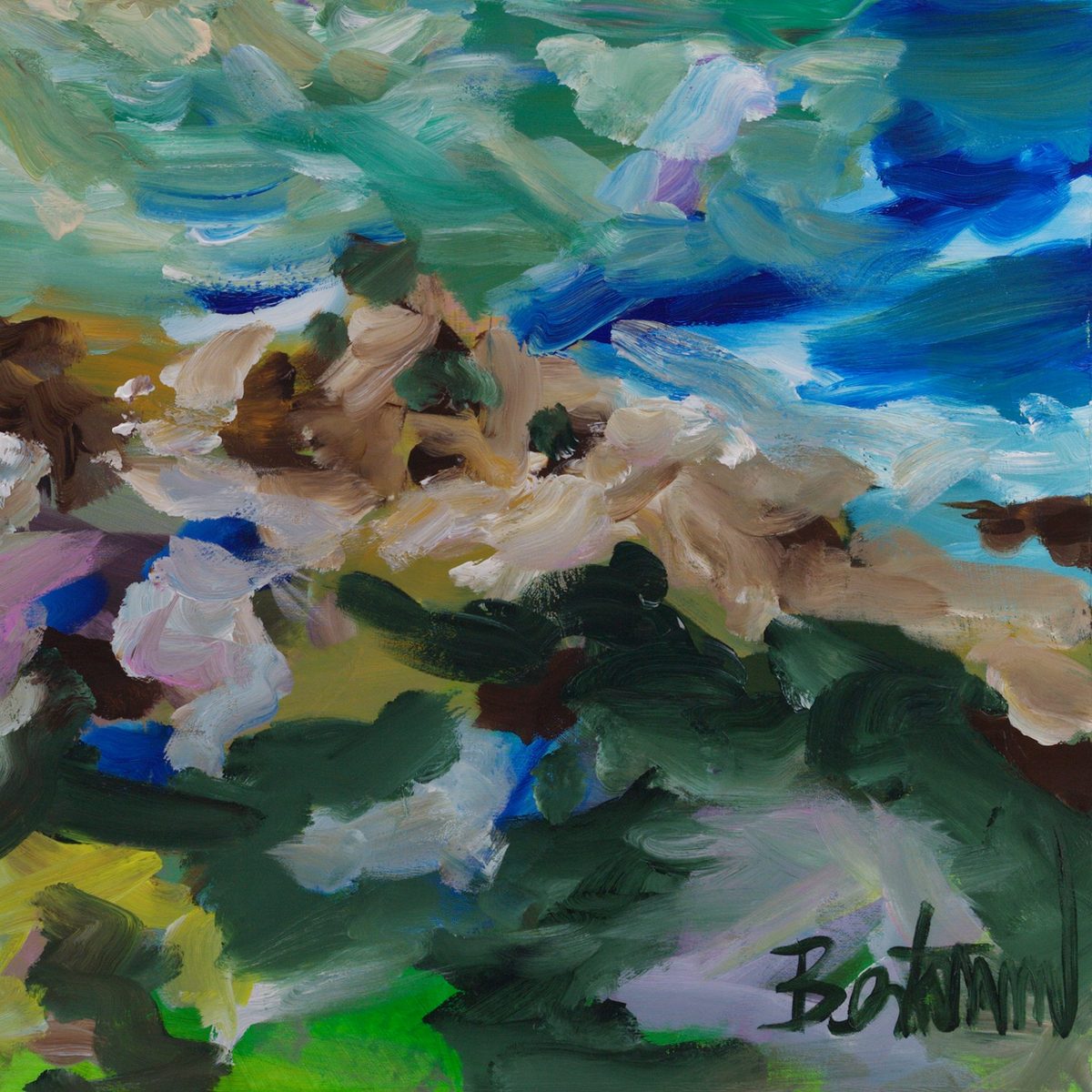
The debt to German Expressionism is open. Perspective is loosened, the bay tips up toward the viewer, and the colour is pushed past description into pure sensation — turquoise and acid green against cobalt and deep navy, with ochre rock and dark coastal scrub holding the edges. The point is not accuracy. The point is the feeling of light on moving water, caught fast.
A travel series of small moments
This is the thread that ties the new series together. The subjects come from the places Claus Bertermann returns to with his wife, several times a year — a village staircase in Provence, a swim off Formentera, the kind of scene anyone might walk past without a second look. There is no catastrophe in them and no grand subject. The wager is the opposite one: that the experienced moment does not have to be special to become a special moment, and that painting is what does the elevating.
It is a wager with good company. In his late work, Georg Baselitz turned again and again to the most banal of motifs — a garden fence, a plain domestic corner — and let the meaning live not in the subject but in the act of painting it. Bertermann's series runs on the same conviction, in warmer colour: the ordinary, looked at hard enough and painted fast enough, is more than enough.
Made by a real person — not AI
Like every work in the studio, Formentera 01 is an original, one-of-a-kind painting, made by hand by a real person, not AI. The merging of the colours, the loosened perspective, the small irregularities of the wet surface — all of it is intentional, and all of it is the record of a human body moving fast in front of a two-metre canvas.
Formentera 01, 2026. Acrylic on canvas, 210 × 160 cm (height × width). Signed on the front and the back. An early work of a new series, part of the figurative works.
→ View Formentera 01 in the gallery
This painting belongs to Claus Bertermann’s 2026 expressionist figurative series — large-format works painted wet-in-wet in a single live pass, with the drawn layer laid over the merged colour in oil stick.