Grimaud (2026) — A Meeting on the Stairs
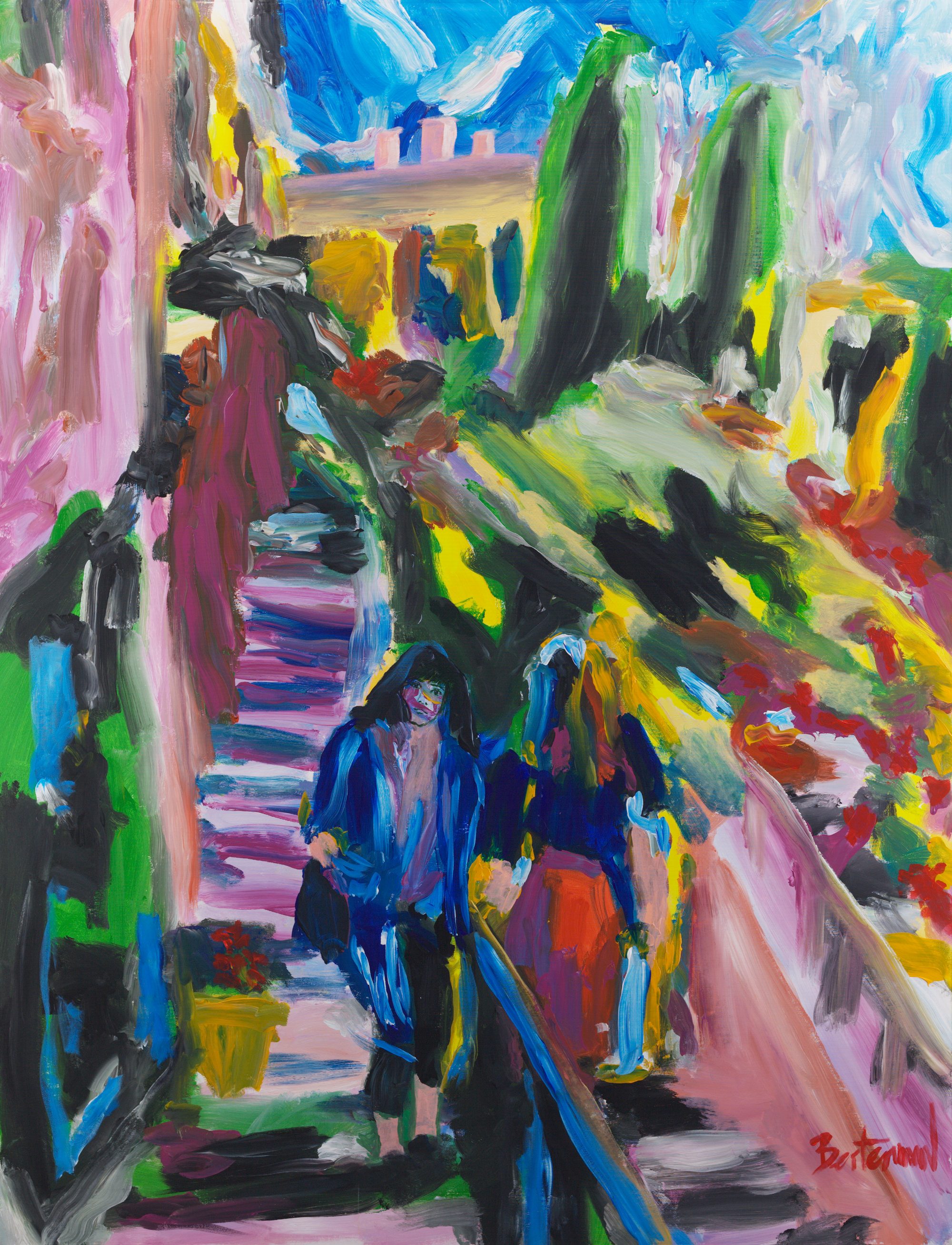
Two people meet on a staircase. One is going up, the other coming down. For the length of a single shared step they stand on the same patch of stone — and then the village takes them back. Grimaud fixes that half-second: the most ordinary encounter in the world, and the most quietly loaded. It is also the first painting of a new series, and the first time Claus Bertermann has worked this way.
A meeting on the stairs
The setting is Grimaud, a hill village in Provence — cypresses standing like dark exclamation marks, ochre houses with pink chimneys, the whole place folded into a steep flight of mauve-pink steps. The painting tells no story. It presents a condition: two trajectories, up and down, arrival and departure, pinned to the same worn stair under the same high-summer sun. Who the figures are to each other — strangers, a parting, a reunion arrived a flight too late — the picture flatly refuses to say. That refusal is the point.
A new way of painting: wet-in-wet
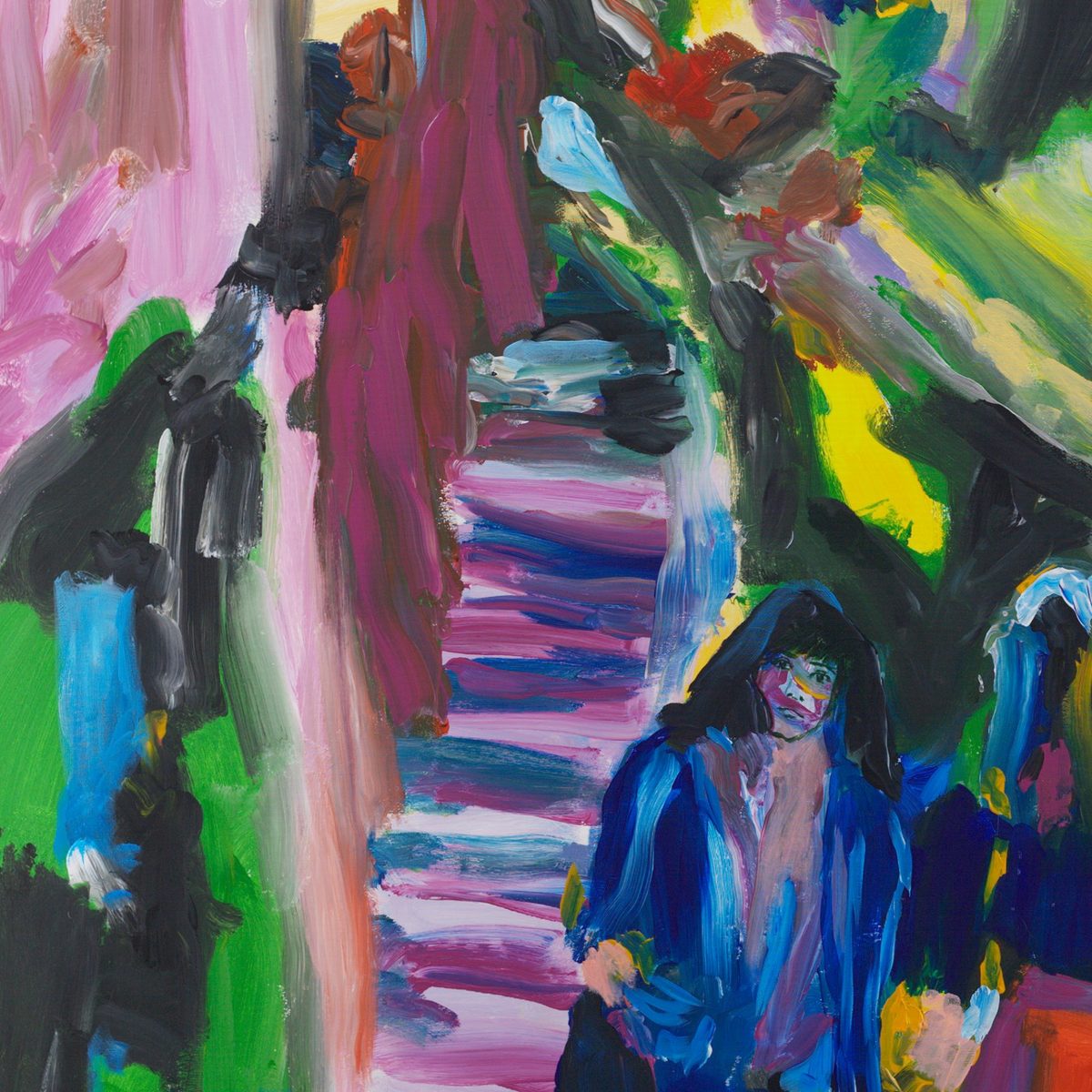
With Grimaud, Bertermann changes his physical process from the ground up. The roller and the oil-stick contour line of his earlier figurative work are gone. Here he paints everything wet-in-wet, with large brushes, while the paint is still live — figures, steps, foliage and sky laid down in one forward pass so that each colour bleeds into the next and the boundaries dissolve. Nothing is sealed off; everything keeps moving.
The result is openly indebted to German Expressionism. Kirchner's tilted streets and angular crowds come to mind: perspective is intentionally bent, the staircase rears up more steeply than any surveyor would allow, and the colour is pushed past description into pure sensation — electric pinks, acid greens, cobalt and flame-orange colliding without apology.
The first work of a new series
Collectors who know the abstract series and the earlier figurative works will see the break immediately. This is a warmer, more volatile kind of painting — fluid where the older work was constructed, merged where it was once separated into rough ground and assertive line. Grimaud is the canvas that sets the vocabulary the rest of the series will be measured against.
Made by a real person — not AI
Like every work in the studio, Grimaud is an original, one-of-a-kind painting, made by hand by a real person, not AI. The merging of the colours, the bent perspective, the small irregularities of the wet surface — all of it is intentional, and all of it is the record of a human body moving fast in front of a two-metre canvas.
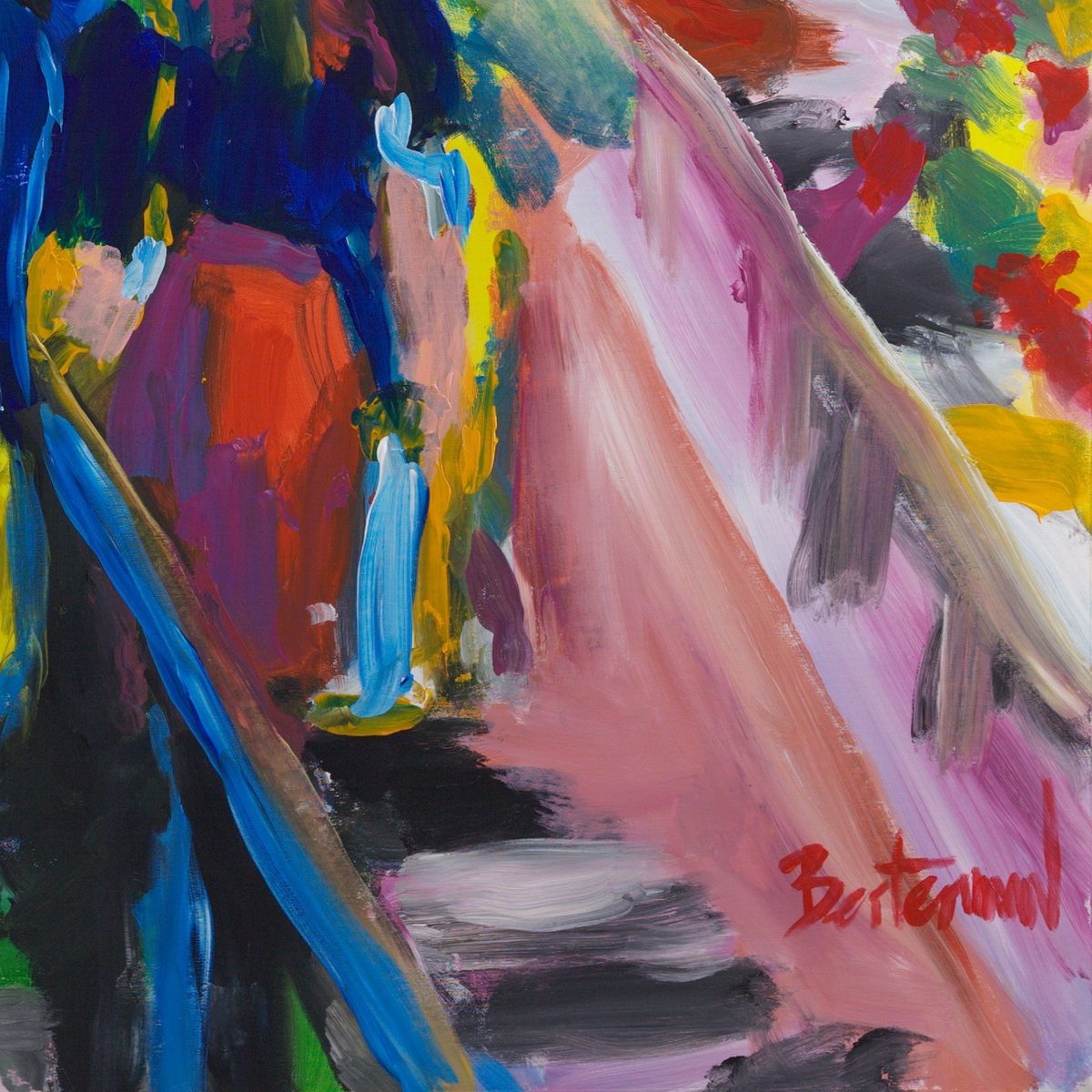
Grimaud, 2026. Acrylic on canvas, 210 × 160 cm (height × width). Signed on the front and the back. The first work of a new series, part of the figurative works.
This painting belongs to Claus Bertermann’s 2026 expressionist figurative series — large-format works painted wet-in-wet in a single live pass, with the drawn layer laid over the merged colour in oil stick.