Human Judgment Is the Scarce Resource
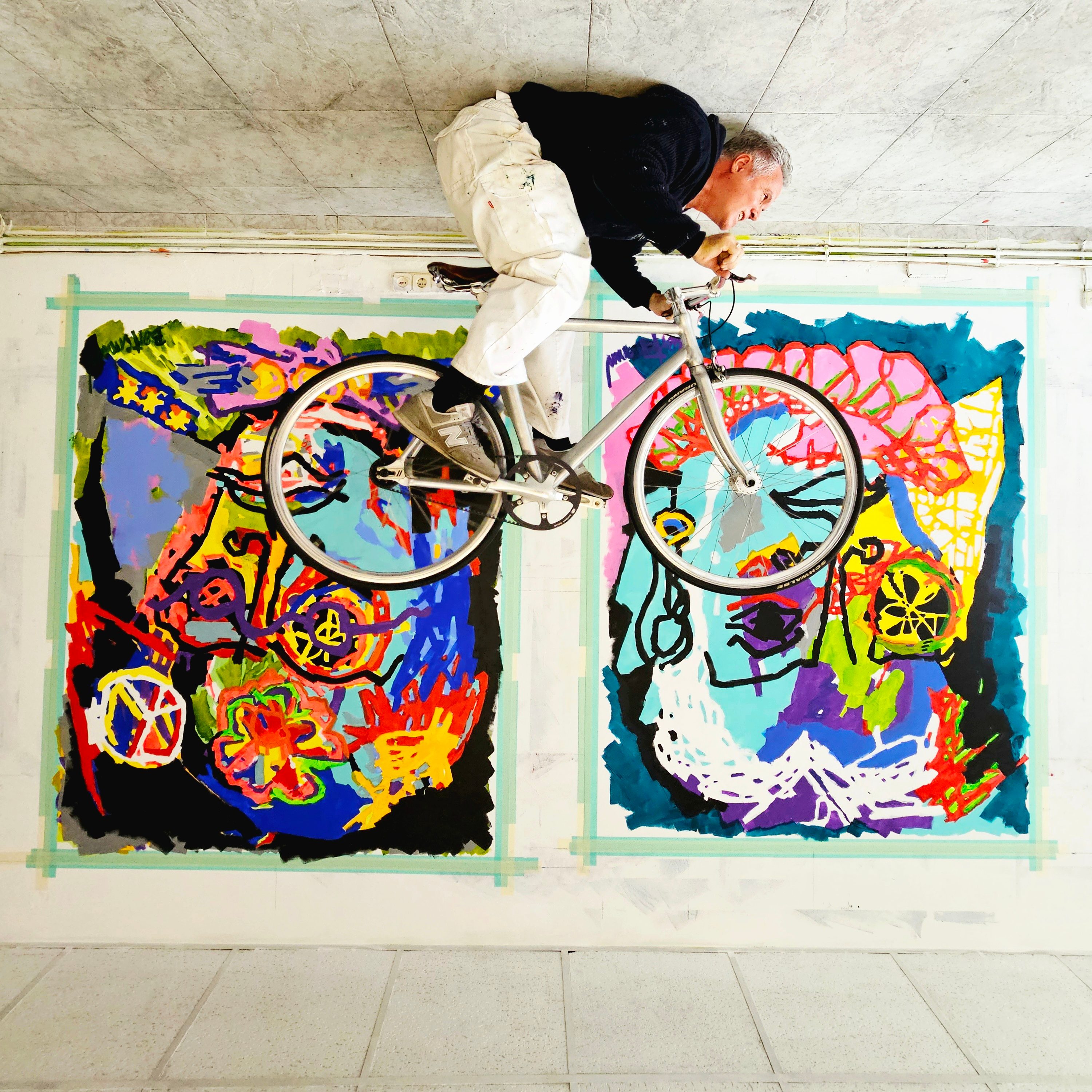
The laboratories building artificial intelligence have started saying something remarkable about their own work: most of the routine making — the writing, the coding, the producing — is increasingly done by machines. Execution is becoming cheap. What the machines do not supply is the part that decides whether a thing is right: judgment. The scarcer good was never the ability to produce. It was always the ability to choose.
A painting is a stack of decisions
A two-metre canvas does not record talent. It records roughly a thousand decisions — which colour goes down first, where a layer is allowed to survive, when a passage that took three days gets scraped away because the picture is better without it. After more than 1,000 large-format abstract and figurative works created and sold over the last decade, I can say this plainly: the paint is the cheap part. The judgment about the paint is the work.
Training the eye is slower than training a model
I trained as an architect before I painted, and spent two decades building companies in between. Architecture teaches a particular discipline: every decision is load-bearing, and you live with what you decide. Running a business teaches the same lesson at a different price: judgment is the only thing you cannot delegate. An AI model can be trained in months. An eye — a sense for when a surface is finished, when a line carries weight, when a picture stops needing you — is trained over decades, mostly through being wrong. That asymmetry is the point. What takes decades to build does not become abundant just because everything else did.
Tools that remove control sharpen judgment
In the studio I often choose tools that reduce my precision rather than increase it — a paint roller instead of brushes, an oil stick drawing a silhouette in one pass. Less control over the stroke forces more judgment about the whole: where to stop, what to keep, what survives. This is the opposite of how machines improve, which is by tightening control over every variable. A painting gets better the other way — by deciding well under conditions you refuse to fully control.
Made by a real person — not AI
Every work in this studio is an original, one-of-a-kind painting, made by hand by a real person, not AI. As generated images become effortless and infinite, that sentence changes meaning: it no longer just describes a method, it names what you are actually acquiring — condensed human judgment, a record of one person deciding, in front of a canvas, thousands of times, what is right. Execution can be automated. Deciding what is worth executing cannot.
A selection of works is in the abstract series and the figurative works.