Till Disconnect Do Us Part (2026) — Holding Hands with the Machine
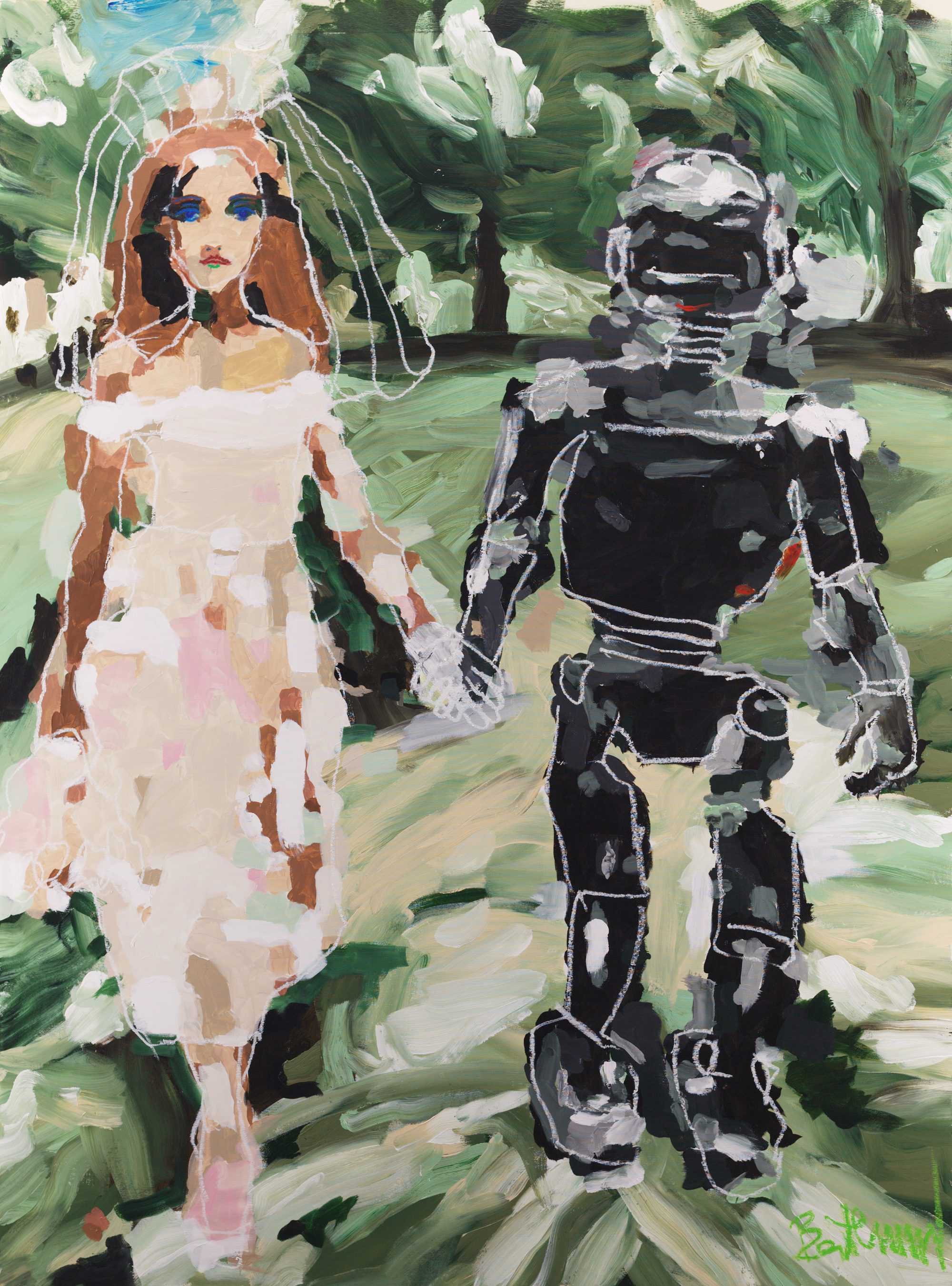
She walks down the garden path in white, veil trailing, hand in hand with her groom. Everything about the scene is familiar — the summer park, the blossom, the ceremonial walk toward the viewer. Only one thing is off: the groom is a machine. Till Disconnect Do Us Part paints the oldest scene in the romantic repertoire with a perfectly straight face, and lets the title do the sabotage. Machines do not die — they disconnect. The oldest vow in the book is quietly downgraded to uptime.
A condition, not a narrative
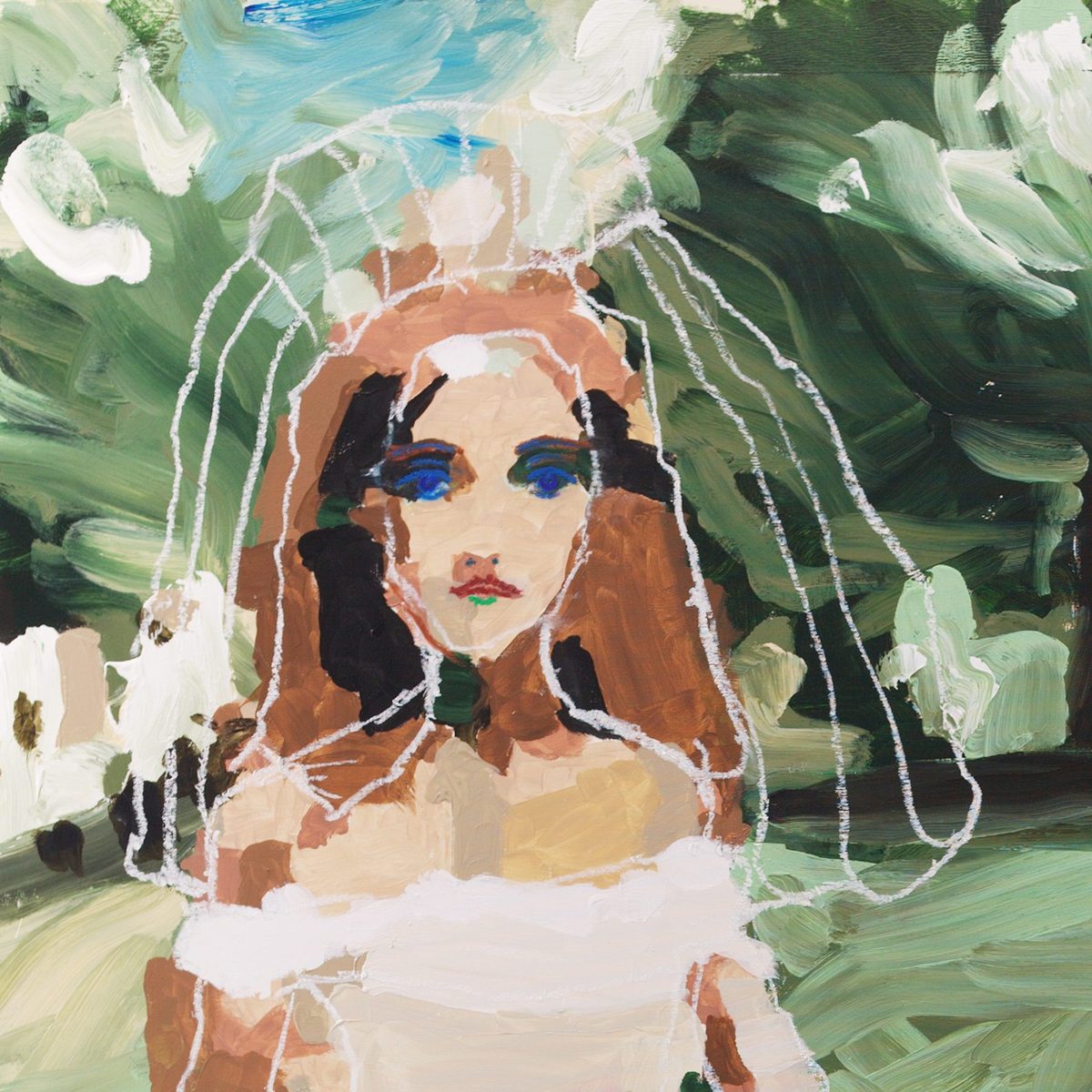
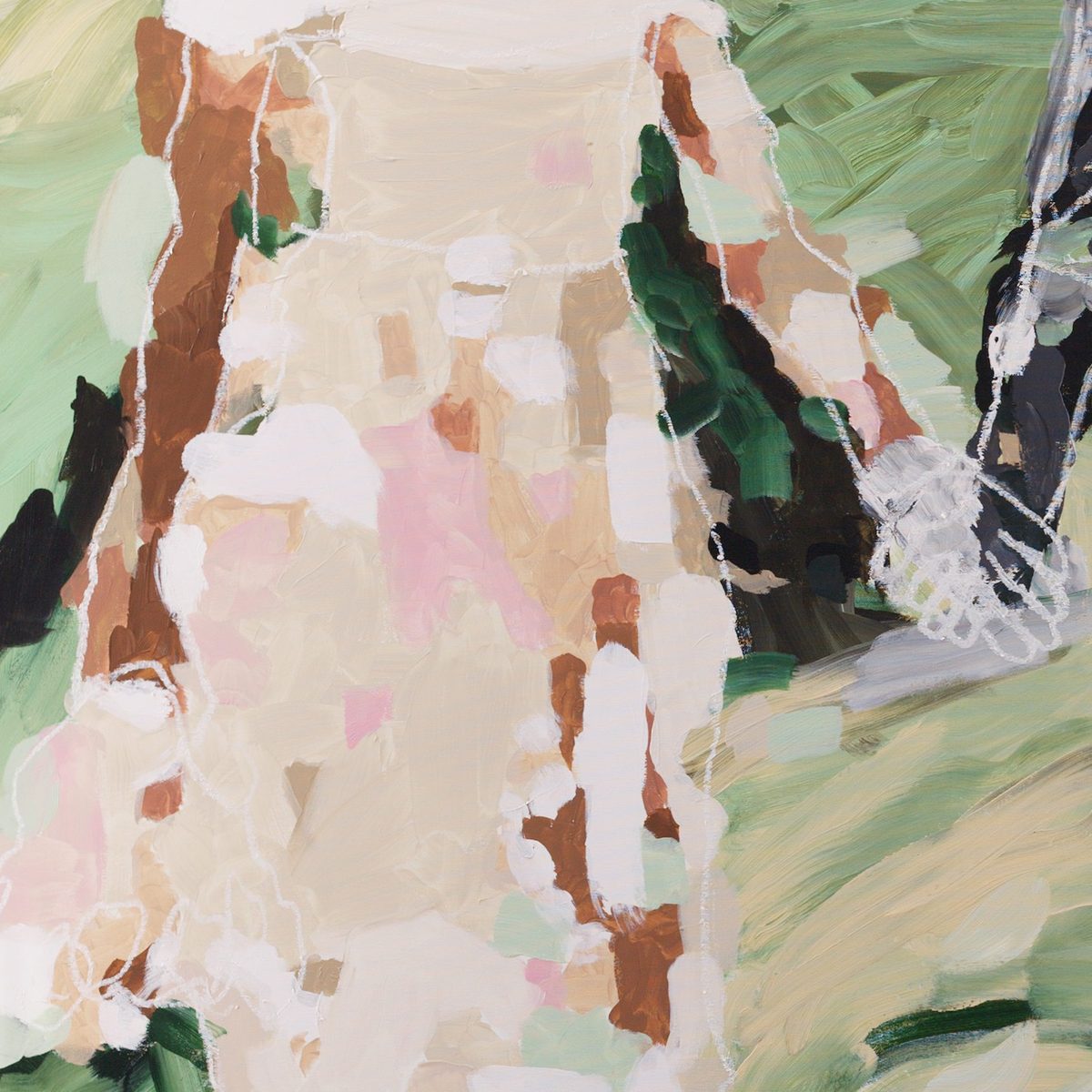
The painting refuses to explain itself. There is no crowd, no altar, no commentary — just two figures holding hands on a pale path between brushed greens. But look longer and it plays a darker joke: the robot is the most solid presence on the canvas — opaque, confident, fully there. The bride is the one dissolving. Her dress breaks into open patches of cream and pink, her skin flickers in and out of the ground, her veil is nothing but a white oil-stick line barely holding its shape. The human is the ghost in this wedding photograph; the machine is the portrait.
Painted with wide brushes, drawn with an oil stick
For his figurative works, Claus Bertermann normally applies the acrylic ground with a paint roller. In this canvas he deliberately changes the instrument: the entire park is laid in with wide brushes — broad, directional strokes that keep the momentum of the arm visible and give the foliage its restless, flickering energy. It is a technical variation with a visible consequence: where the rolled grounds sit flat and coarse, this ground moves.
The figures' contours are then drawn directly with oil stick — intuitively, and independently of the painted ground. The lines do not follow the surface underneath; they cut through it. And the same white line describes them both: silk and steel drawn with an identical stroke, as if, in the drawing layer at least, the marriage had already been consummated.
Built forward, not scraped back
Collectors who know the abstract series will recognise the difference immediately. In the abstracts, layers are applied and scraped back again — the image emerges like sediment, by removal. Till Disconnect Do Us Part is built the opposite way: forward only. Brushed acrylic first, decisive oil stick contours on top. Nothing is taken back; every move stays.
Made by a real person — not AI
Here the studio's standing principle becomes the subject of the picture itself. Till Disconnect Do Us Part is a painting about the seduction of the artificial — made emphatically by hand. Every sweeping brush stroke and every wandering oil-stick contour insists on the human presence that the scene is busy giving away. Like every work in the studio, it is an original, one-of-a-kind painting, made by a real person, not AI.
Till Disconnect Do Us Part, 2026. Acrylic and oil stick on canvas, 210 × 160 cm (height × width). Signed on the front and the back. Part of the figurative works.