Gambit (2026) — He Is Not Looking at the Board
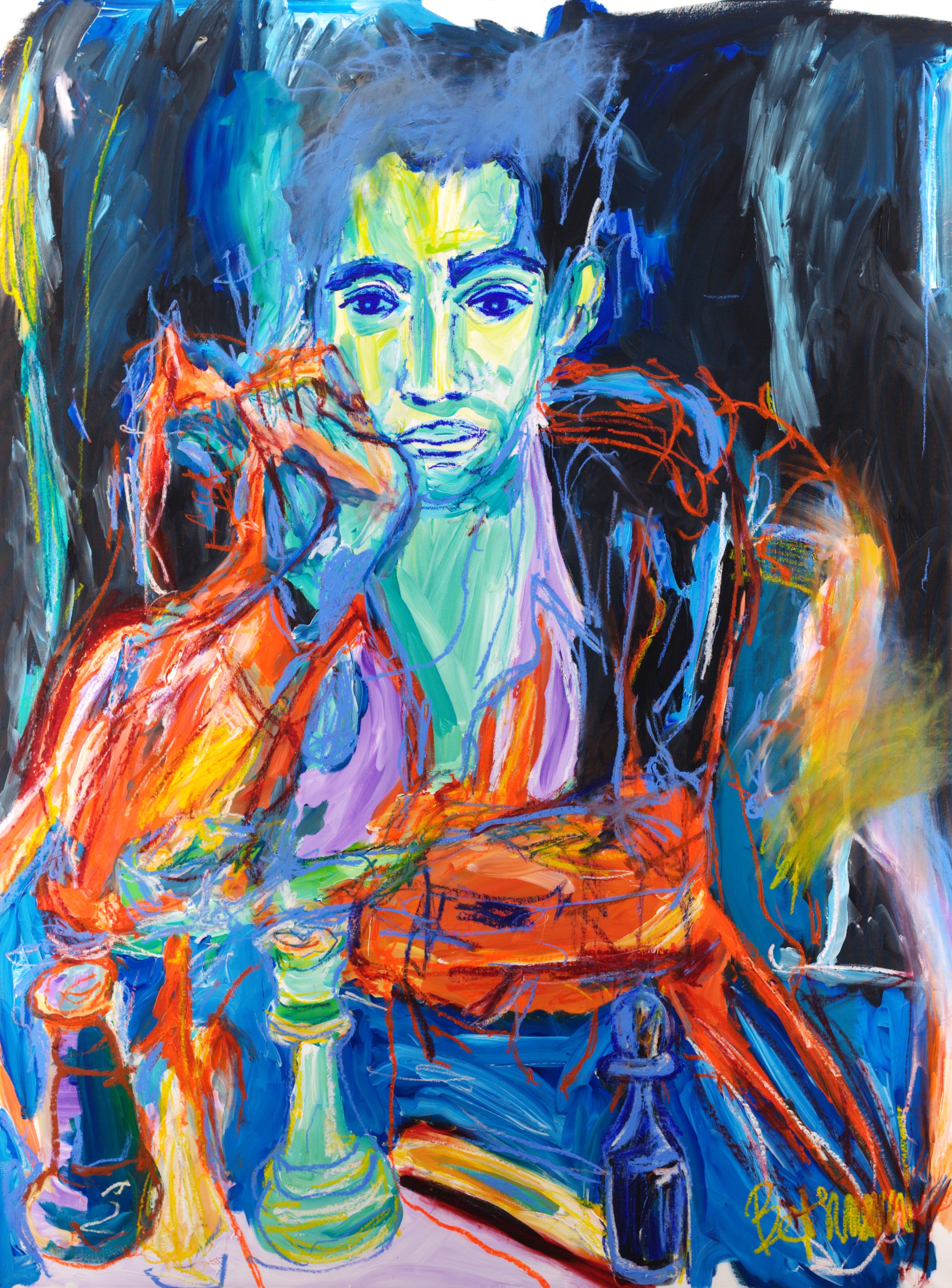
A gambit is the oldest trick in chess. You offer your opponent a piece for free. It looks like a mistake, it is meant to look like a mistake, and the whole point is that the other player cannot resist taking it.
The young man in Gambit sits at the board with his cheek propped on his hand, in the classic posture of someone deep in calculation. Except that he is not looking at the board.
A condition, not a story
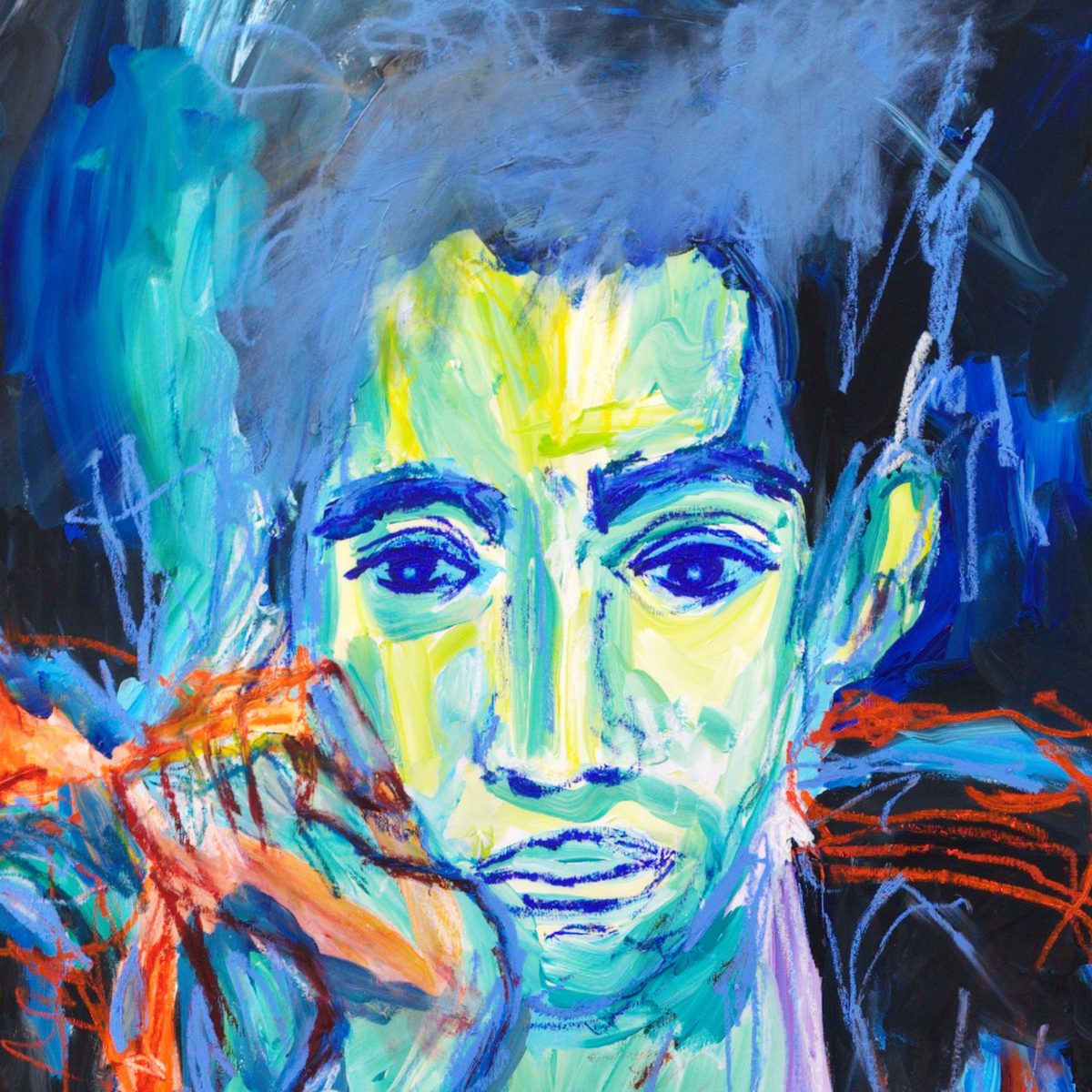
He is looking at you. Straight out of the canvas, at eye level, with the calm of someone who already knows the next five moves and can afford to wait.
Check which side the pieces are on
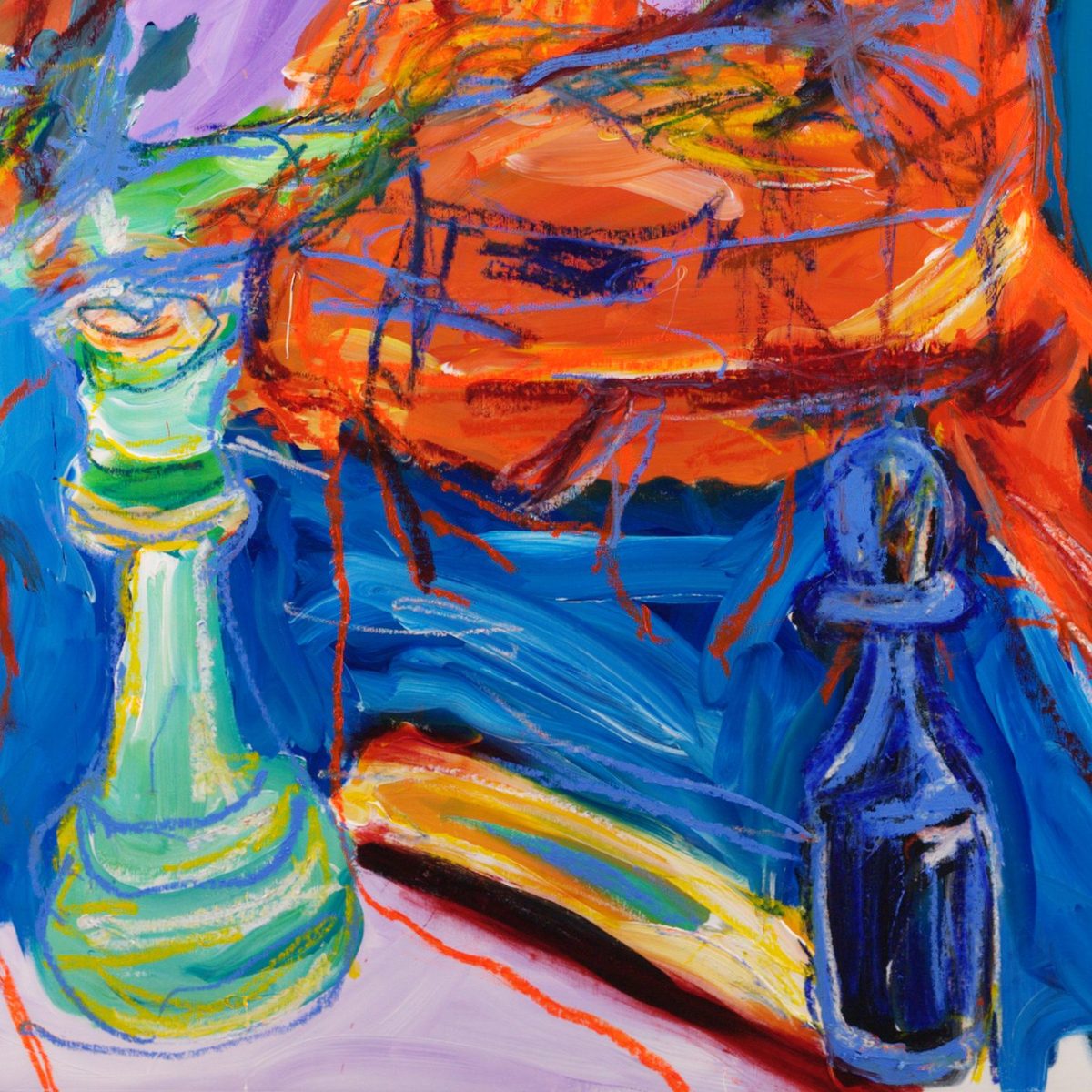
The chess pieces stand in the foreground, large, right up against the lower edge of the canvas — on the viewer's side of the board. His side is an empty field of orange. Whatever he had, he has already given away. The move has been made and the offer is on the table.
The game is the stare
That is the twist, and it is also the title. A portrait that looks directly out of the picture is itself a gambit: it offers the viewer something that seems free — a face, an open gaze, a moment of contact — and the viewer takes it without thinking. By the time you have held his eyes for a few seconds, you have accepted. Your move.
Under the drawing, the paint is doing something else entirely. The near-black background, the turquoise face, the lilac shirt and the orange table are laid in first, in coarse, broad brushstrokes that settle nothing precisely and keep the movement of the arm visible. The drawing arrives afterwards and sits on top of that ground: the cobalt eyes, the red-orange scribble of the jacket and arm, the white and yellow rims of the pieces. Freedom below, precision above, and no scraping back — the image is built forward, like every figurative work in this series. Collectors who know the abstract series will recognise the inversion: there the surface is built over months and cut back into; here the line is laid on top and stays there.
An architect's scale
At two metres high, the face sits close to the eye level of a standing viewer and the pieces in the foreground are larger than life. The painting does not show a chess game from the outside. It seats you at the table, on the side that has to move next.
Made by a real person — not AI
Like every work in the studio, Gambit is an original, one-of-a-kind painting, made by hand by a real person, not AI. The smoky hair, the scribbled arm, the yellow smear crossing the right edge — all of it is intentional, and all of it is the record of a human body working fast in front of a canvas two metres tall.
Gambit, 2026. Acrylic and oil stick on canvas, 200 × 150 cm (height × width). Signed on the front and the back. Part of the figurative works.
This painting belongs to Claus Bertermann’s 2026 figurative series — large-format works in acrylic and oil stick in which the drawn layer always lies on top of the paint, never in it.