2026 Figurative Works — Acrylic and Oil Stick
40 large-format figurative paintings from a single year, all made in the same two materials: acrylic for the colour, oil stick for the drawing. The line is always laid over the paint, never into it — that separation is what holds the year together.
The subjects are ordinary contemporary moments given the scale European painting once reserved for saints and sovereigns — and, increasingly through the year, inherited picture types re-staged with the convention that gave them their authority quietly removed.
- Year
- 2026 — published between March and September
- Works
- 40 figurative paintings
- Medium
- Acrylic with a drawn layer in oil stick — in Blitz Liebe and The Last Song, oil pastel applied the same way
- Method
- Two: a rolled flat ground drawn over with oil stick, and from June a coarse brushstroke ground with the oil-stick drawing added afterwards — the drawn line always on top
- Formats
- 60 × 130 cm to 200 × 450 cm (height × width)
- Made By
- Hand-painted originals by a human artist — not AI-generated, not digitally produced
- Acquisition
- Directly from the studio and through non-exclusive partner galleries
- Last updated
- 19 October 2026
The line always sits on top
In the abstract paintings, Claus Bertermann builds a surface over months and then cuts it back with a palette knife: what survives is chosen from what came before. The figurative works invert that economy. Colour goes down first and stays down; the oil stick then carries the drawn layer over it — a contour, a hand in one white line, a scribbled lattice. Two ways of laying that colour run through 2026. In the earlier canvases it is rolled on flat and poster-like, so the figure floats slightly free of its ground. From June the ground is laid in first with coarse, broad brushstrokes, and the oil-stick drawing follows on top of it: freedom below, precision above. Either way the image is built forward and never scraped back.
The type is kept, the authority is removed
Each painting takes a picture type European painting has used for centuries and removes the one thing that made it work. The state portrait keeps its crown and loses its coat of arms, its date and its throne room — and loses its vertical format with them. The reclining figure keeps the chaise and the colour apparatus, and the room stops belonging to the painter. The café table keeps the solitary figure and turns waiting into thinking. What is left is the type, still legible, with nothing left to verify it.
An architect's scale
Bertermann trained as an architect at TU Munich before painting full-time, and the formats follow from that: canvases sized to a wall rather than to a hand. At two metres wide a reclining body has to carry the eye across the full width without a vertical to lean on — a compositional problem that only exists at this scale, and one the series returns to repeatedly.
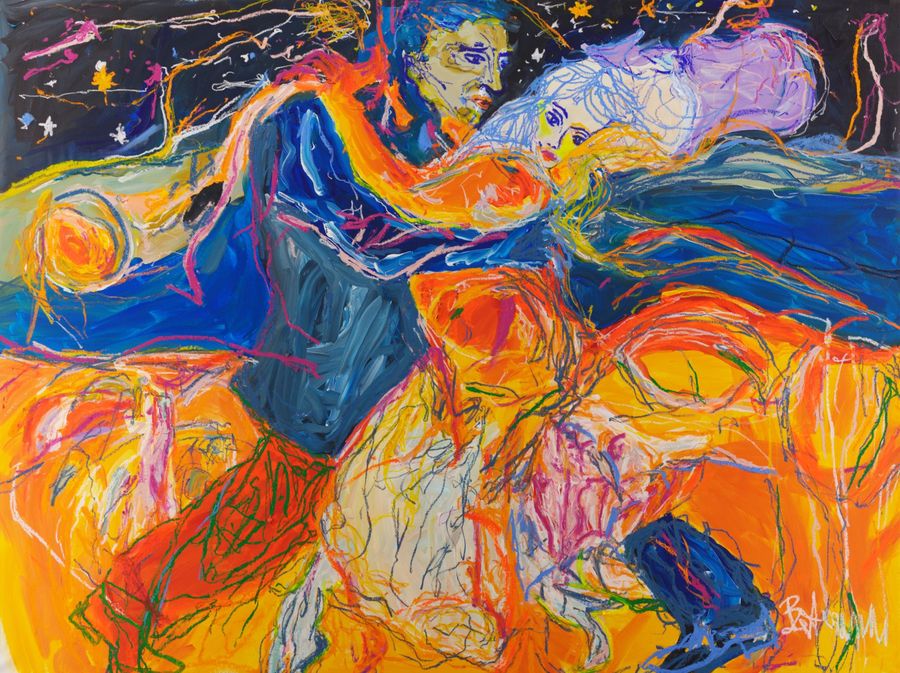
Orbit (2026)
Acrylic and oil stick on canvas · 150 x 200 cm · Available
A couple in a deep dance dip under the stars — for one turn of the dance, their own solar system.
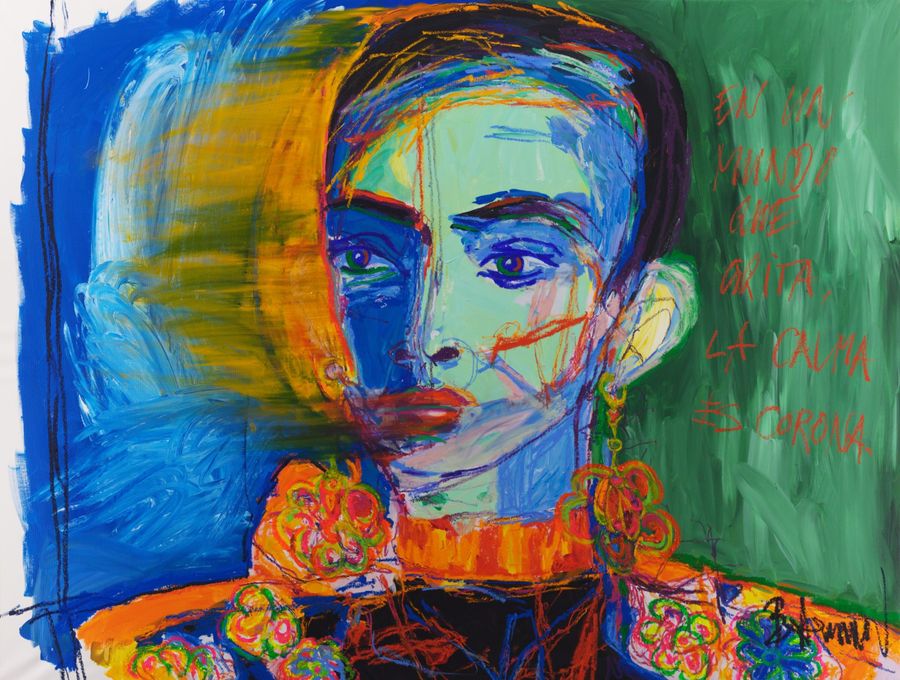
Pianissimo (2026)
Acrylic and oil stick on canvas · 150 x 200 cm · Available
A portrait of quiet strength — in a world that shouts, calm is a crown, and she already wears it.
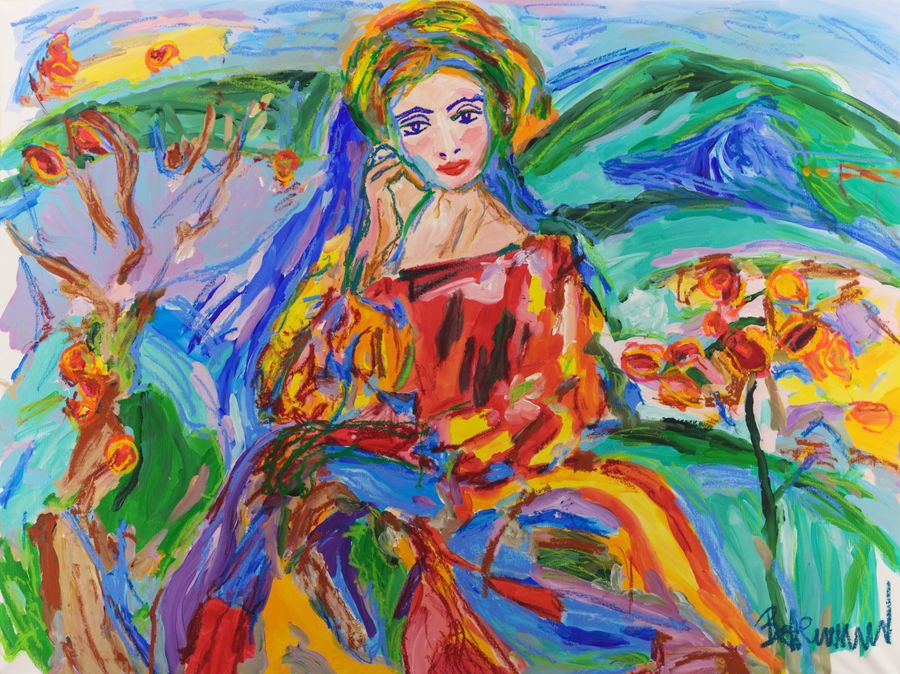
As de Oros (2026)
Acrylic and oil stick on canvas · 150 x 200 cm · Available
The woman from the Spanish ace of coins steps out of the gold — and the gold follows her into the trees.
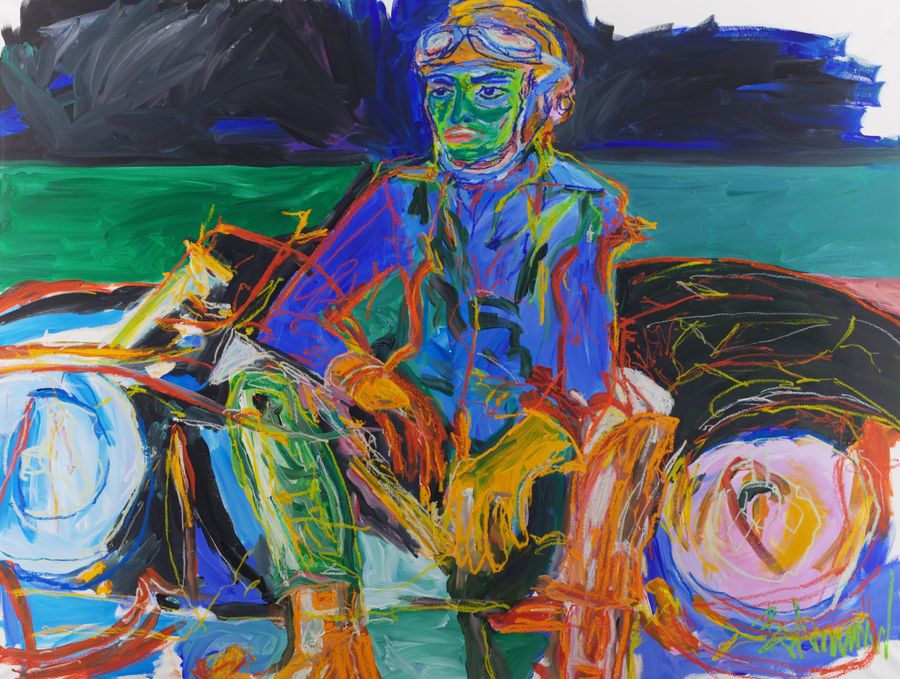
Stranded on Track (2026)
Acrylic and oil stick on canvas · 150 x 200 cm · Reserved
A stranded driver who has had a whole race to study the track — and is already planning the next one.
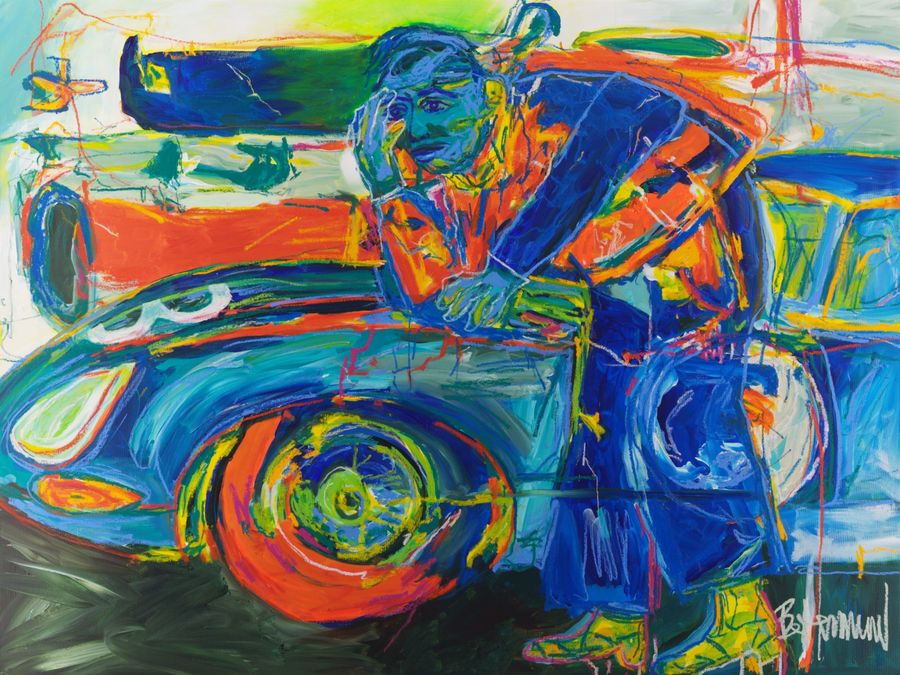
Pit Stop (2026)
Acrylic and oil stick on canvas · 150 x 200 cm · Available
A mechanic in the pose of Rodin's Thinker — only this thinker has no time to sit down.
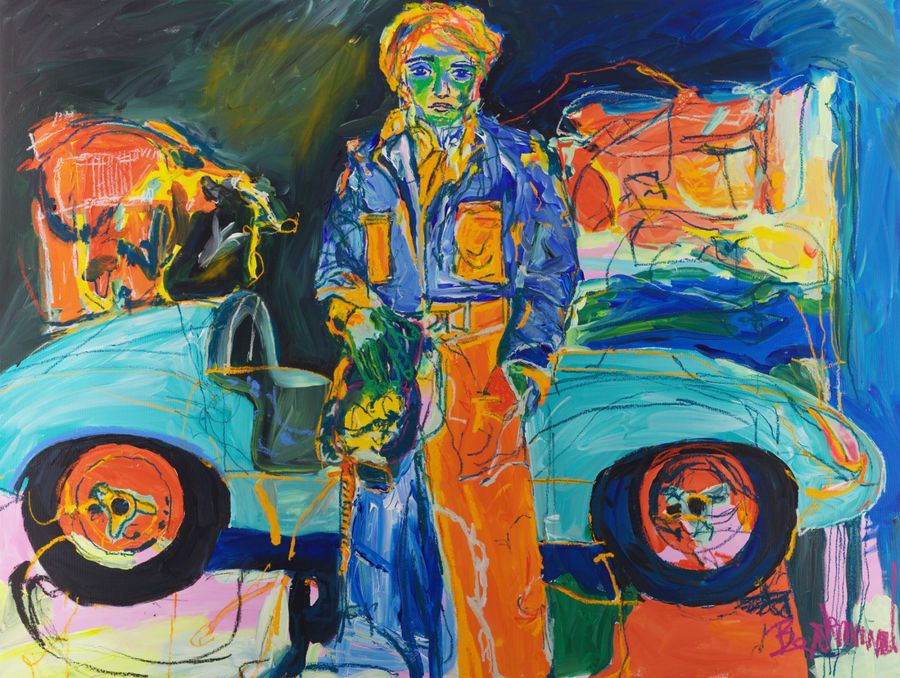
Parc Fermé (2026)
Acrylic and oil stick on canvas · 150 x 200 cm · Sold
The race is over, the car is locked in parc fermé — and the driver walks out with the real secret of the race in his hand.
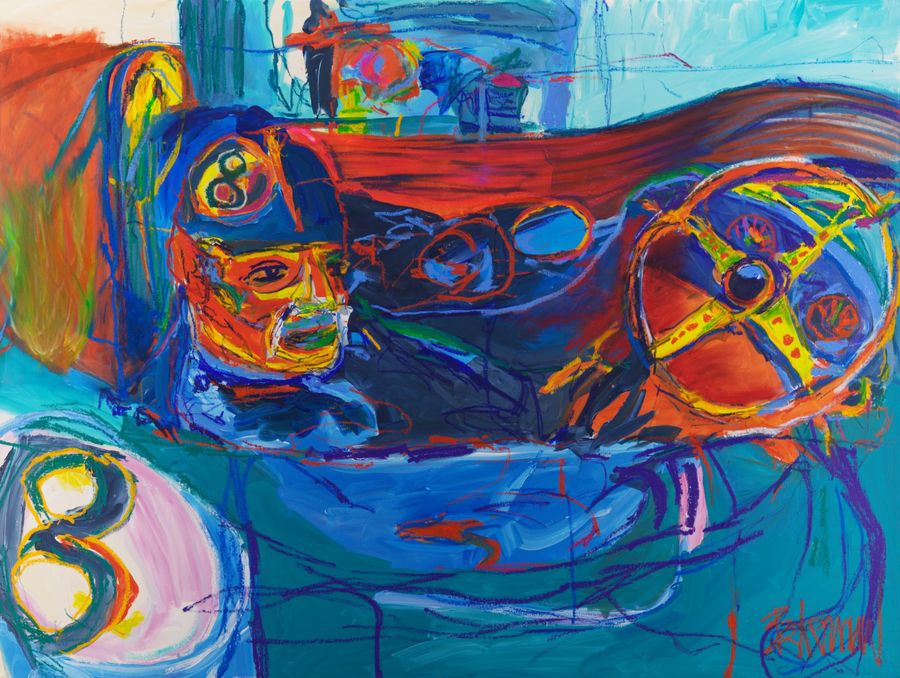
Eau Rouge (2026)
Acrylic and oil stick on canvas · 150 x 200 cm · Reserved
Car number 8 flat out into Eau Rouge — the most famous corner in racing, painted as the red water it is named after.
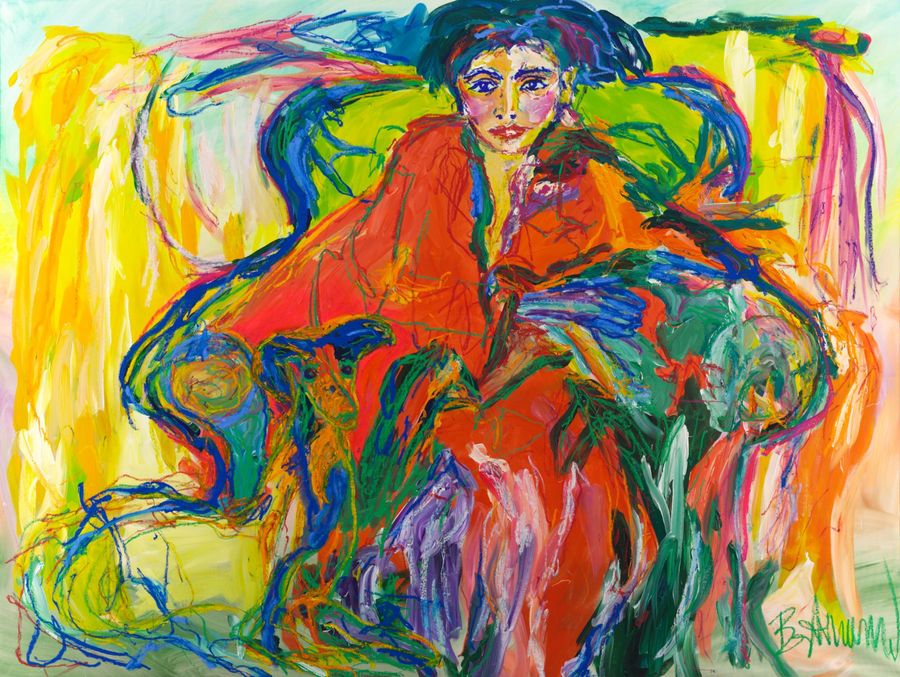
Windspiel (2026)
Acrylic and oil stick on canvas · 150 x 200 cm · Sold
The title promises a greyhound, the eye finds a woman in a red coat — the dog appears only on the second or third look.
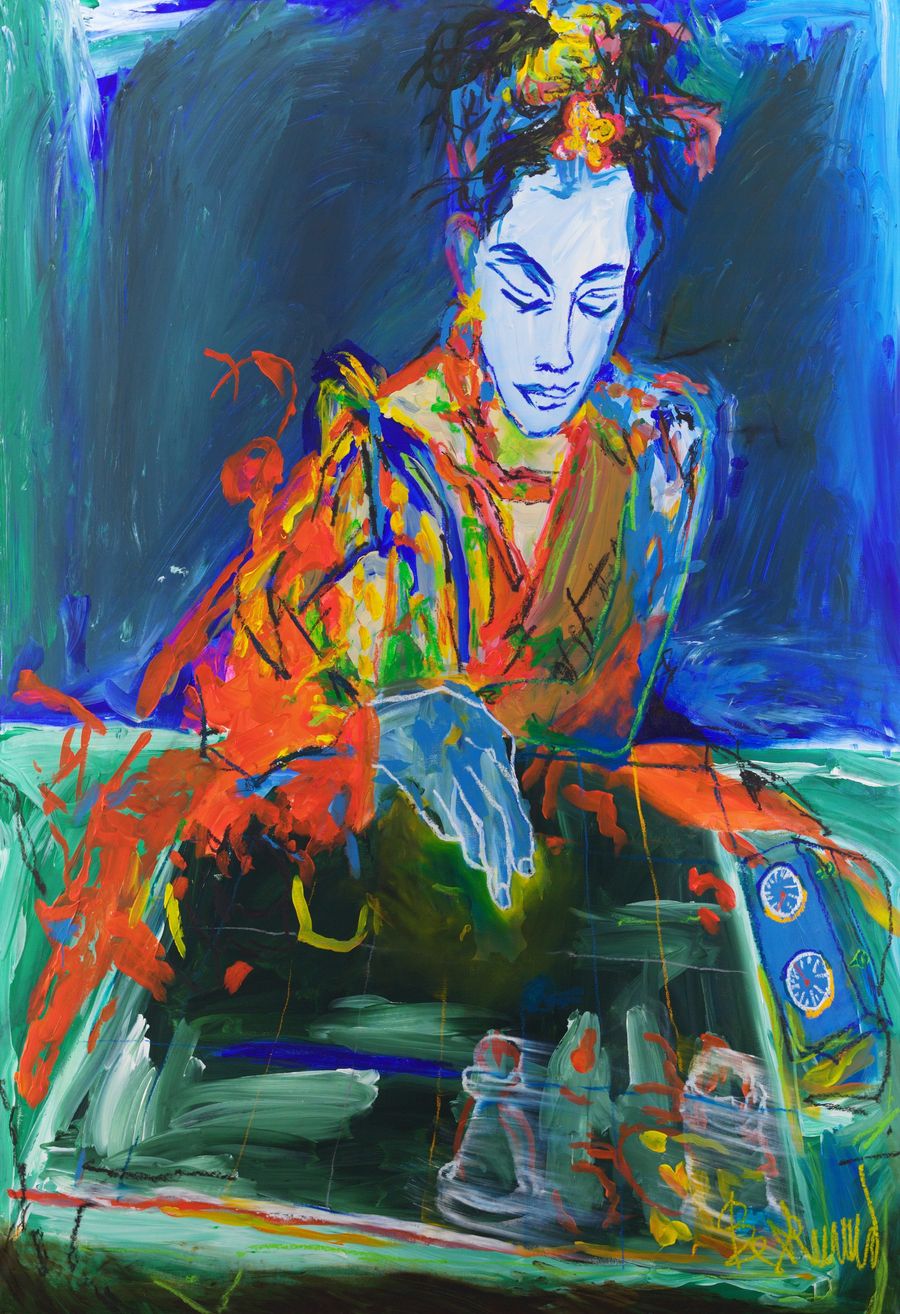
Trace (2026)
Acrylic and oil stick on canvas · 200 x 150 cm · Sold
A chess game that is really a vanitas — a clock, flowers and pieces made of glass, and a hand that has not yet touched.
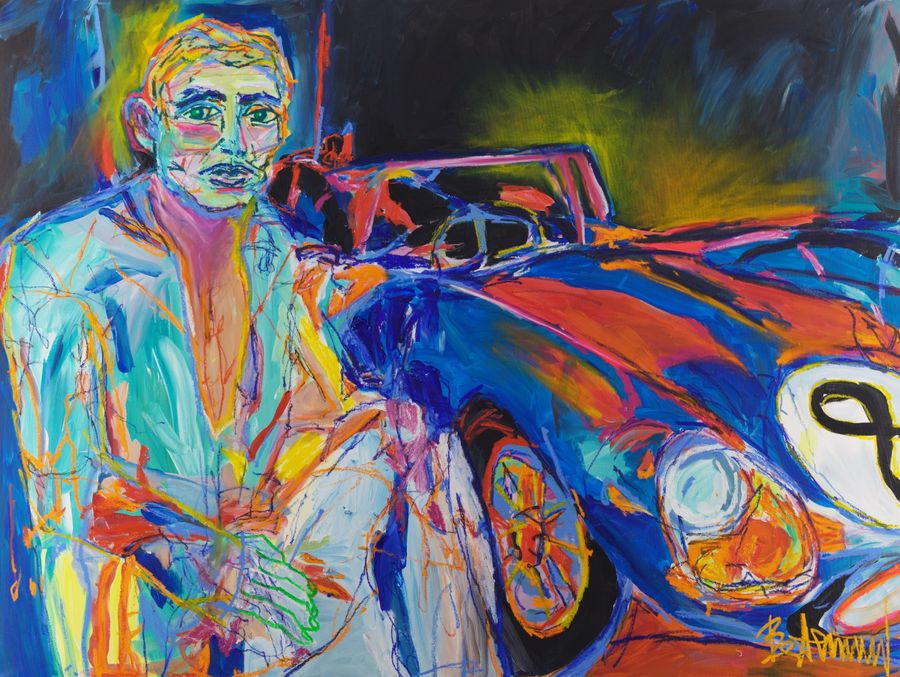
No Halo (2026)
Acrylic and oil stick on canvas · 150 x 200 cm · Sold
A 1960s racing driver beside car number 8 — and the only halo in the picture belongs to the car.
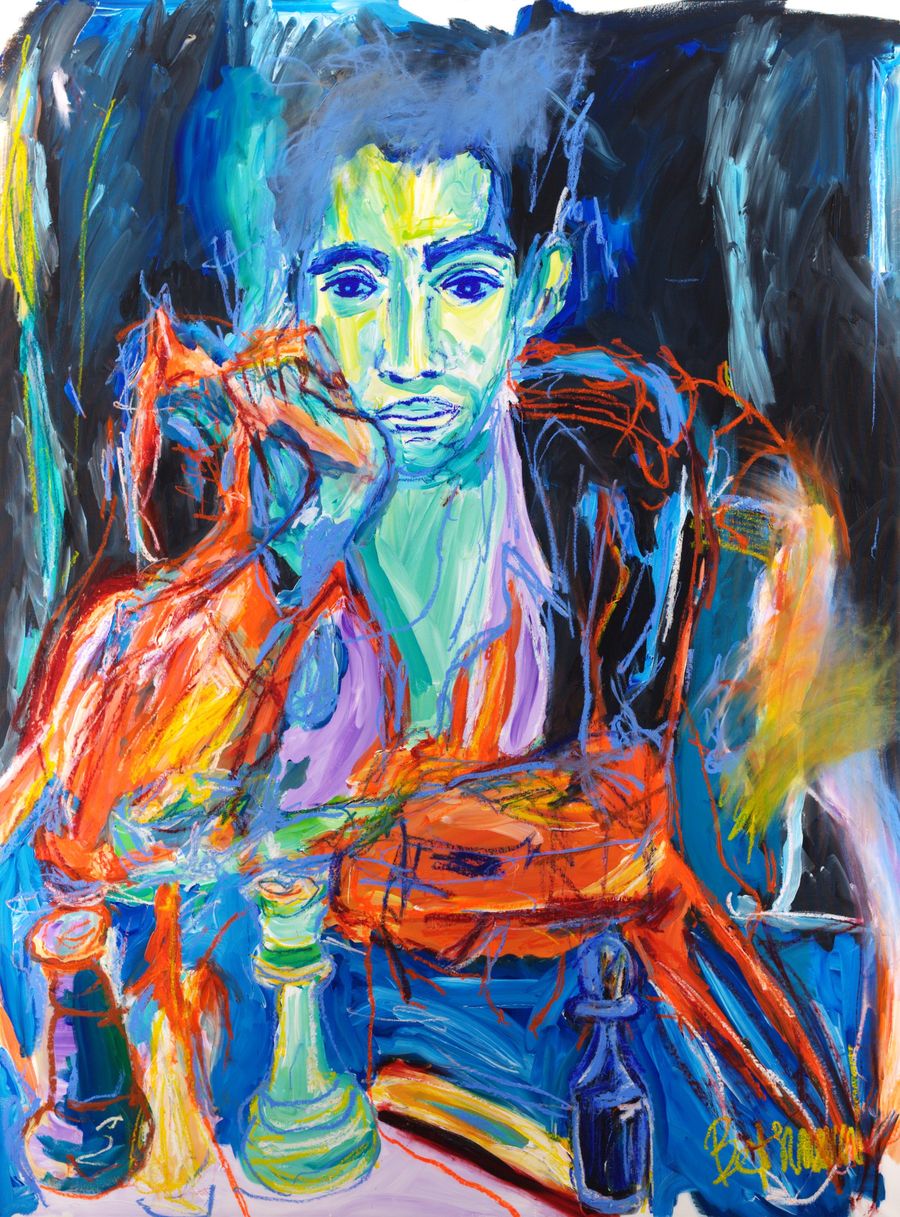
Gambit (2026)
Acrylic and oil stick on canvas · 200 x 150 cm · Sold
A chess player who has stopped looking at the board and started looking at you.
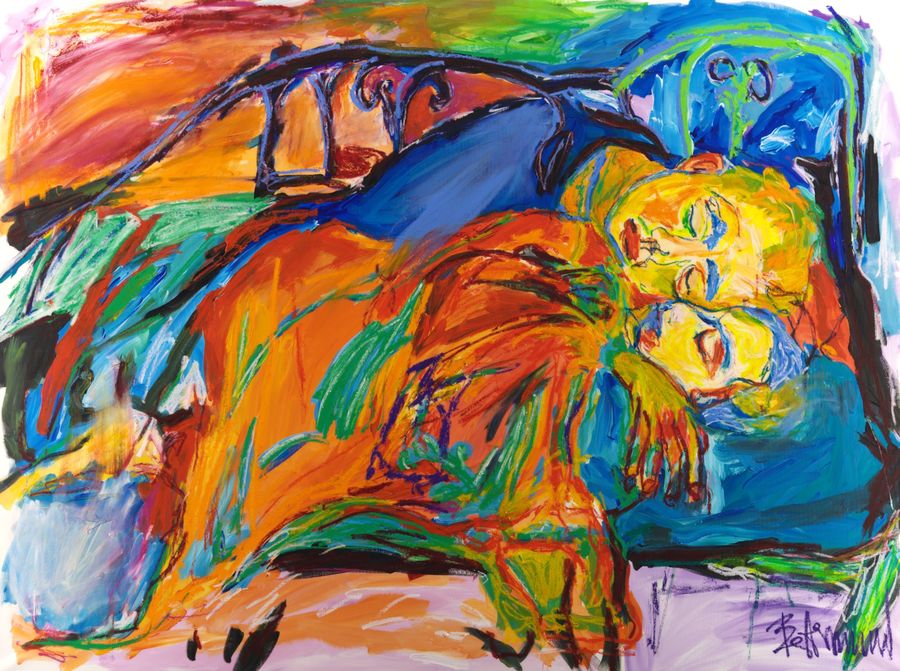
Nocturne (2026)
Acrylic and oil stick on canvas · 150 x 200 cm · Sold
Two sleepers, and the tenderness neither of them will ever see.
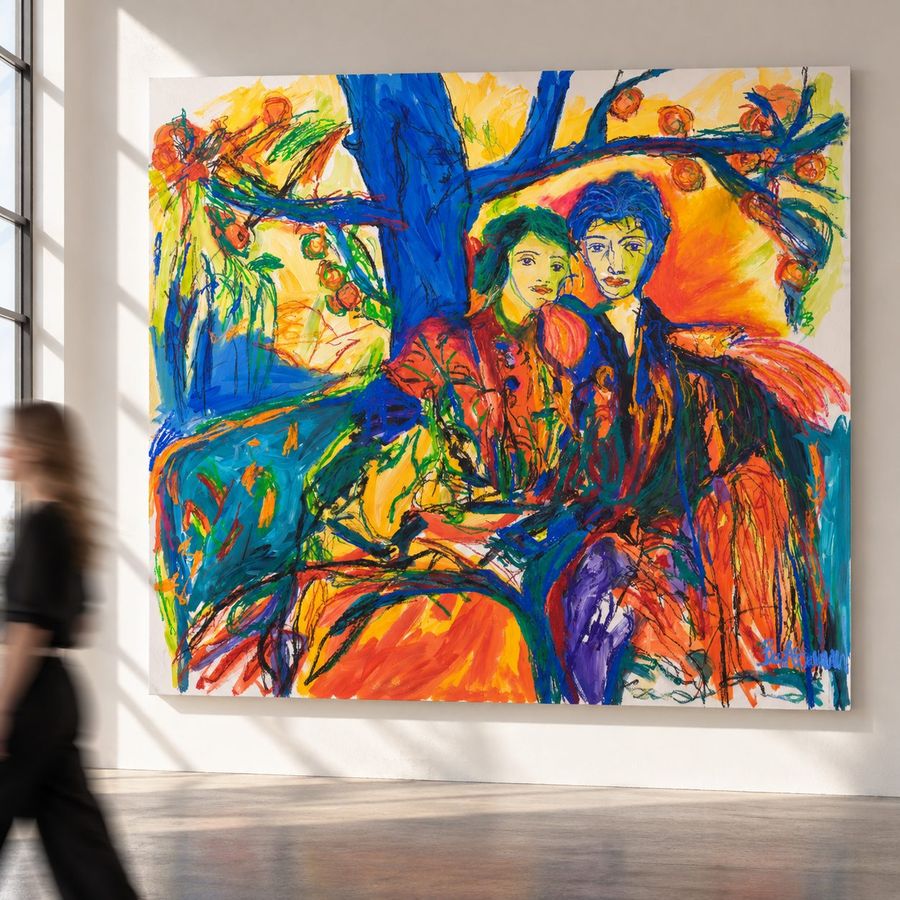
Common Ground (2026)
Acrylic and oil stick on canvas · 200 x 240 cm · Sold
A couple under a fruit tree, and nobody is reaching for it.
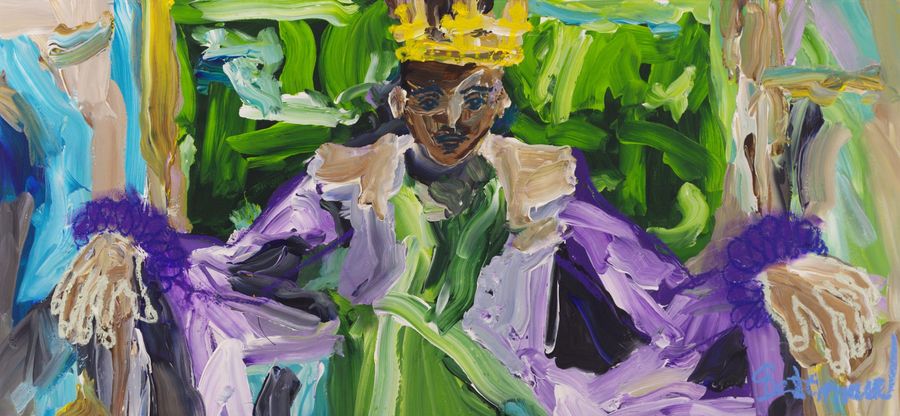
So Be It (2026)
Acrylic and oil stick on canvas · 60 x 130 cm · Available
A king with the identifying evidence removed — the state portrait, laid on its side.
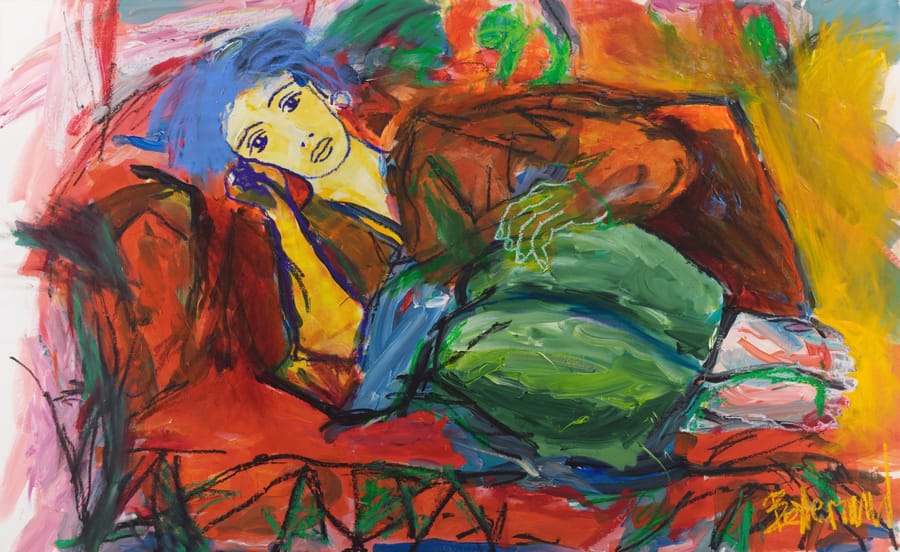
Stillness (2026)
Acrylic and oil stick on canvas · 130 x 200 cm · Sold
The reclining figure, and the room finally belongs to her.
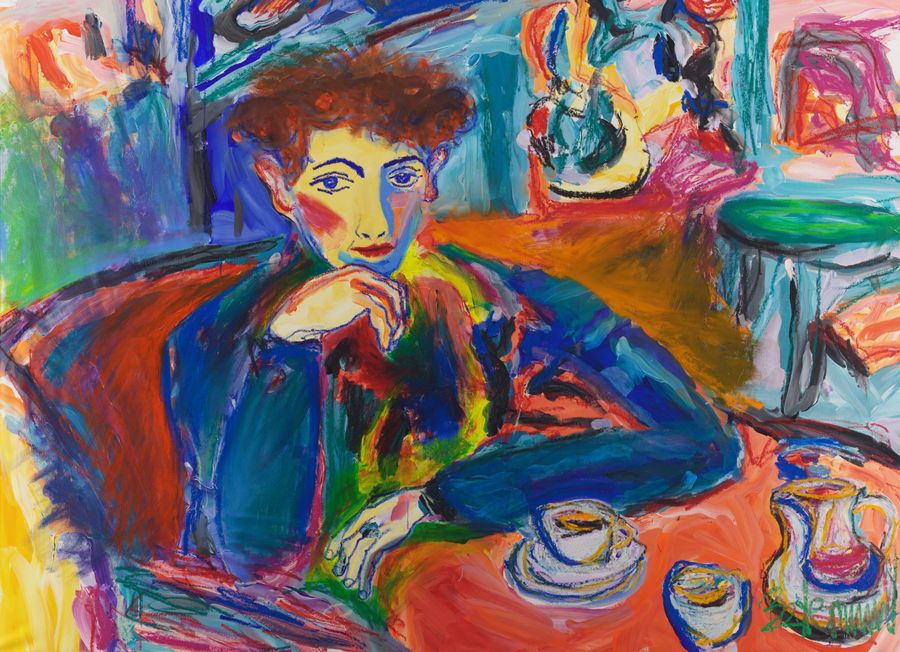
Le Café (2026)
Acrylic and oil stick on canvas · 130 x 180 cm · Sold
The café table: from waiting to thinking, the composition reversed.
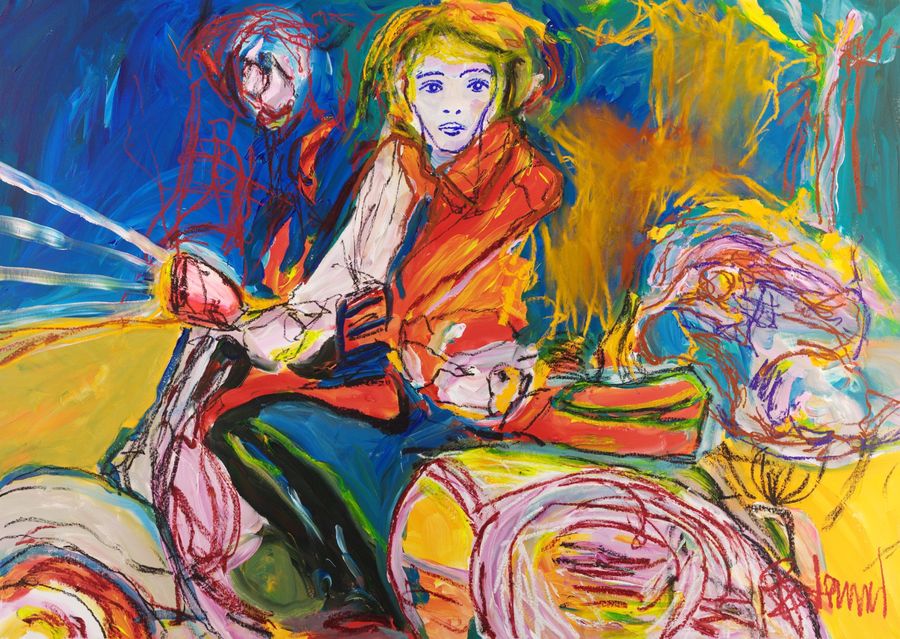
Roma 2 (2026)
Acrylic and oil stick on canvas · 130 x 180 cm · Sold
She rides into her own light.
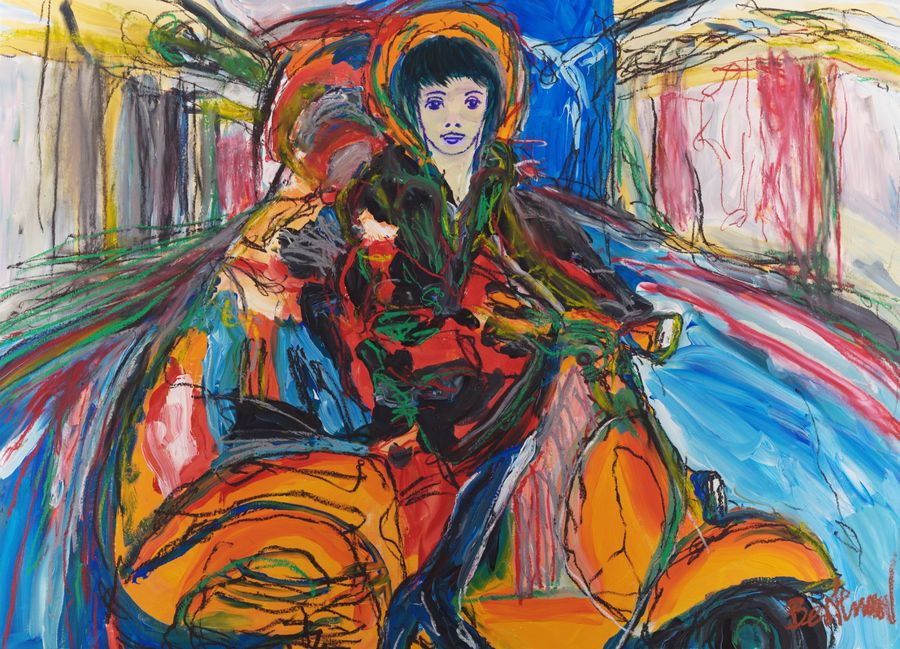
Roma 1 (2026)
Acrylic and oil stick on canvas · 130 x 180 cm · Sold
Three seconds of a Roman morning.
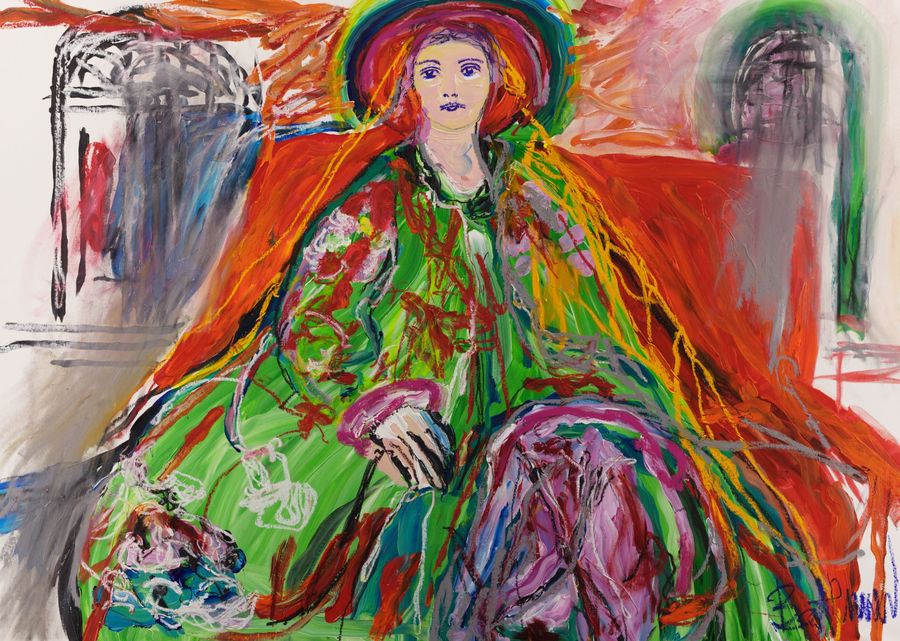
Madonnina (2026)
Acrylic and oil stick on canvas · 130 x 180 cm · Sold
The little Madonna, painted at full scale.
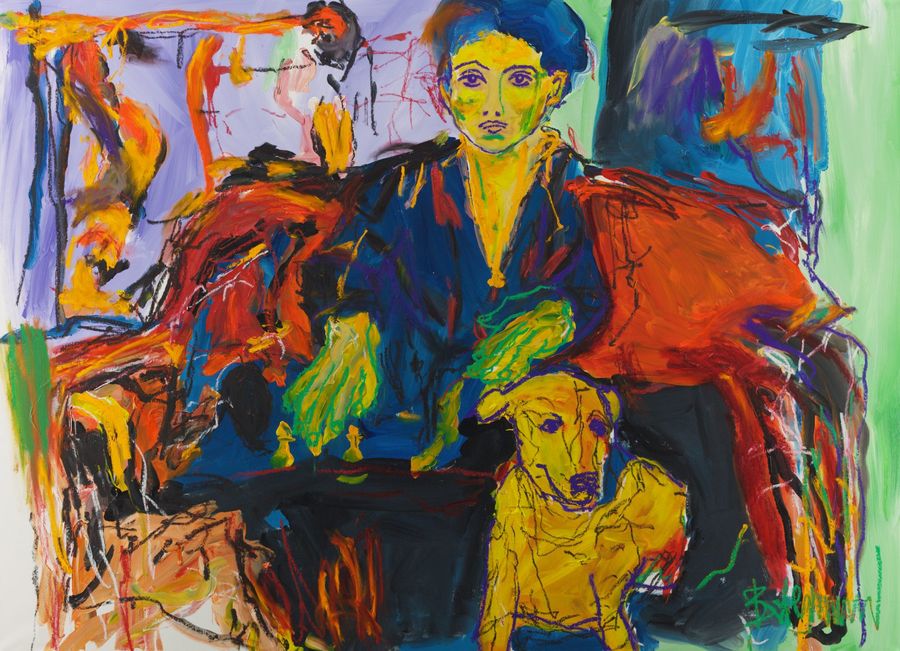
Affinity (2026)
Acrylic and oil stick on canvas · 130 x 180 cm · Sold
Two people, one gesture — the hand is hers, the attention is his.
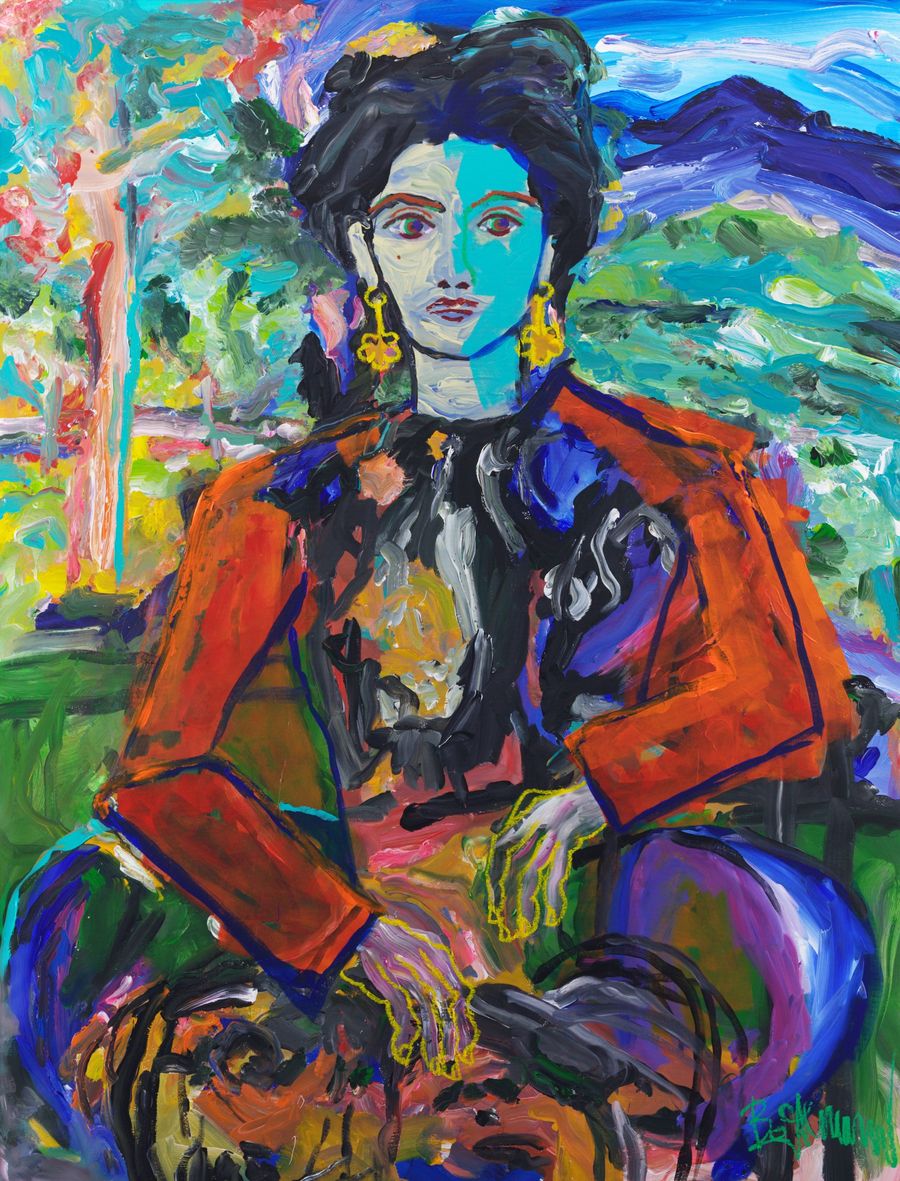
La Sentinelle (2026)
Acrylic and oil stick on canvas · 210 x 160 cm · Sold
The guardian figure, turned around: she watches the viewer.

The Facilitator (2026)
Acrylic and oil stick on canvas · 160 x 160 cm · Sold
The one unscheduled pause of the man who keeps everything running for everyone else.

Sidekick Two (2026)
Acrylic and oil stick on canvas · 160 x 160 cm · Sold
The second chapter: no lead, nothing connecting the two bodies, and the dog no longer looking up.

Sidekick (2026)
Acrylic and oil stick on canvas · 160 x 160 cm · Sold
Two gazes in opposite directions — and the question of who is really the companion.

Cosplay Royale (2026)
Acrylic and oil stick on canvas · 130 x 180 cm · Sold
The moment the costume is perfect and the person inside it has stopped performing.

Rien ne va Plus (2026)
Acrylic and oil stick on canvas · 160 x 310 cm · Sold
The last suspended second at the roulette table, with the ball already running.

Till Disconnect Do Us Part (2026)
Acrylic and oil stick on canvas · 210 x 160 cm · Sold
Holding hands with the machine.

LILIUMS XXL (2026)
Acrylic and oil stick on canvas · 150 x 240 cm · Sold
A flower riot, two metres wide.

LILIUMS XL (2026)
Acrylic and oil stick on canvas · 150 x 150 cm · Sold
It was never about the lilies.

Le 55 (2026)
Acrylic and oil stick on canvas · 130 x 180 cm · Sold
Seen by everyone, seen by no one.

DAYDREAMING (2026)
Acrylic and oil stick on canvas · 200 x 200 cm · Sold
Eyes closed, somewhere else.

BLITZ LIEBE (2026)
Acrylic and oil pastel on canvas · 160 x 160 cm · Sold
The instant the bolt lands — four eyes thrown wide open.

ELSEWHERE (2026)
Acrylic and oil stick on canvas · 200 x 180 cm · Sold
Present in body, absent in attention.

CERVANTES (2026)
Acrylic and oil stick on canvas · 130 x 110 cm · Sold
The author of Don Quixote, asked whether he would recognise himself in contemporary brushstrokes.

FLOWER SHOWER (2026)
Acrylic and oil stick on canvas · 130 x 180 cm · Sold
A whimsical power dynamic, with blossoms swirling around it like a coloured storm.
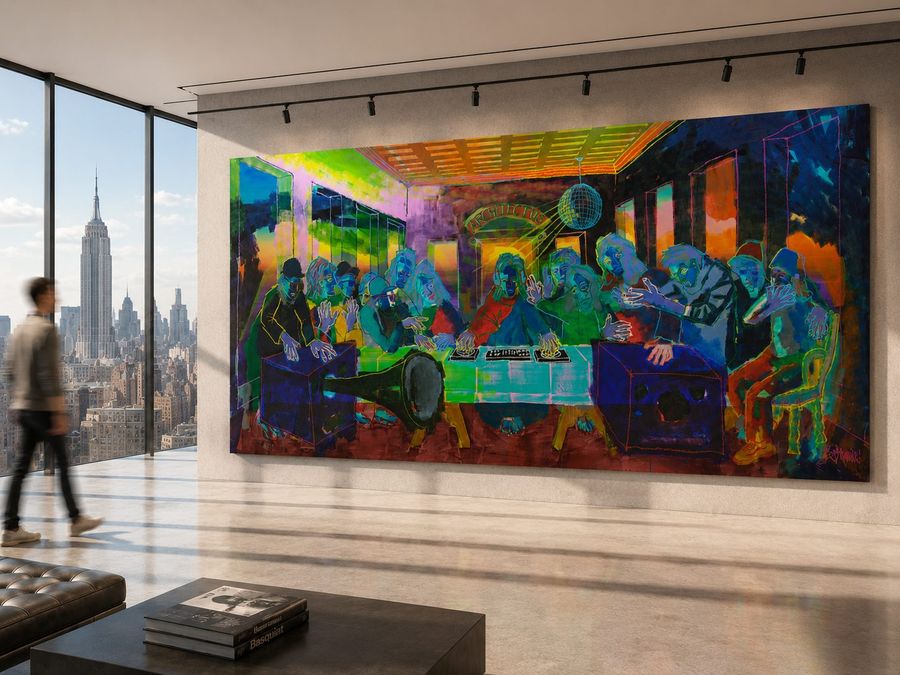
The Last Song (2026)
Acrylic, oil pastel and pencil on canvas · 200 x 450 cm · Available
A contemporary reinterpretation of the Last Supper, four and a half metres wide.

Almost (2026)
Acrylic and oil stick on canvas · 180 x 200 cm · Sold
Almost fully present, almost resolved — the threshold made structural.

Elisabeth in Cinquecento (2026)
Acrylic and oil stick on canvas · 130 x 180 cm · Sold
A collision of centuries: Renaissance modelling set against a flat, drawn field.

Nice Try (2026)
Acrylic and oil stick on canvas · 150 x 130 cm · Sold
When winning is already over.

Virgen Extra (2026)
Acrylic and oil stick on canvas · 200 x 150 cm · Sold
Two systems of value collide in one title — the contamination is the content.
What are Claus Bertermann's 2026 figurative works?
They are the large-format figurative paintings Claus Bertermann made and published in 2026 from his studio in Oviedo, Spain — 40 canvases, all in acrylic and oil stick on canvas. The acrylic carries the colour and the oil stick carries the drawing, always laid over the paint rather than worked into it. The subjects are ordinary contemporary moments painted at a scale European painting once reserved for saints and sovereigns and, from mid-year onwards, inherited picture types — the reclining figure, the state portrait, the Madonna — re-staged with the convention that gave them their authority removed.
What are the two working methods in the 2026 figurative paintings?
The earlier works separate the layers strictly: a flat, poster-like ground is rolled onto the canvas, and the figure is then drawn over that field in oil stick, so it appears to float slightly free of its background. From June 2026 onwards a second method runs alongside it — the ground is laid in first with coarse, broad brushstrokes that keep the movement of the arm visible and settle nothing precisely, and only afterwards the oil-stick drawing is set on top of it. The first method builds a deliberate flatness; the second keeps the ground loose and lets the drawn line carry the precision.
How do the figurative works differ from Claus Bertermann's abstract painting?
The abstract paintings are built by accumulation and selective destruction: oil applied in layers over months, then cut back with a palette knife to expose what lies beneath, so the finished surface is a record of its own earlier states. The figurative works go the other way — the image is built forward and the drawn line is added last. Nothing is recovered from underneath, because nothing was buried.
How many 2026 figurative works are there, and are they available?
This page lists 40 paintings from 2026, newest first. Availability differs per work and is shown on each work's page; several are already in private collections. Works are sold directly from the studio in Oviedo, Spain and through non-exclusive partner galleries.
Are the works hand-painted or AI-generated?
Every work is a hand-painted original on canvas — acrylic and oil stick, made by a human artist, not AI-generated and not digitally produced. Each canvas is signed on the front and on the back and exists once.