Trace (2026) — A Still Life in Disguise
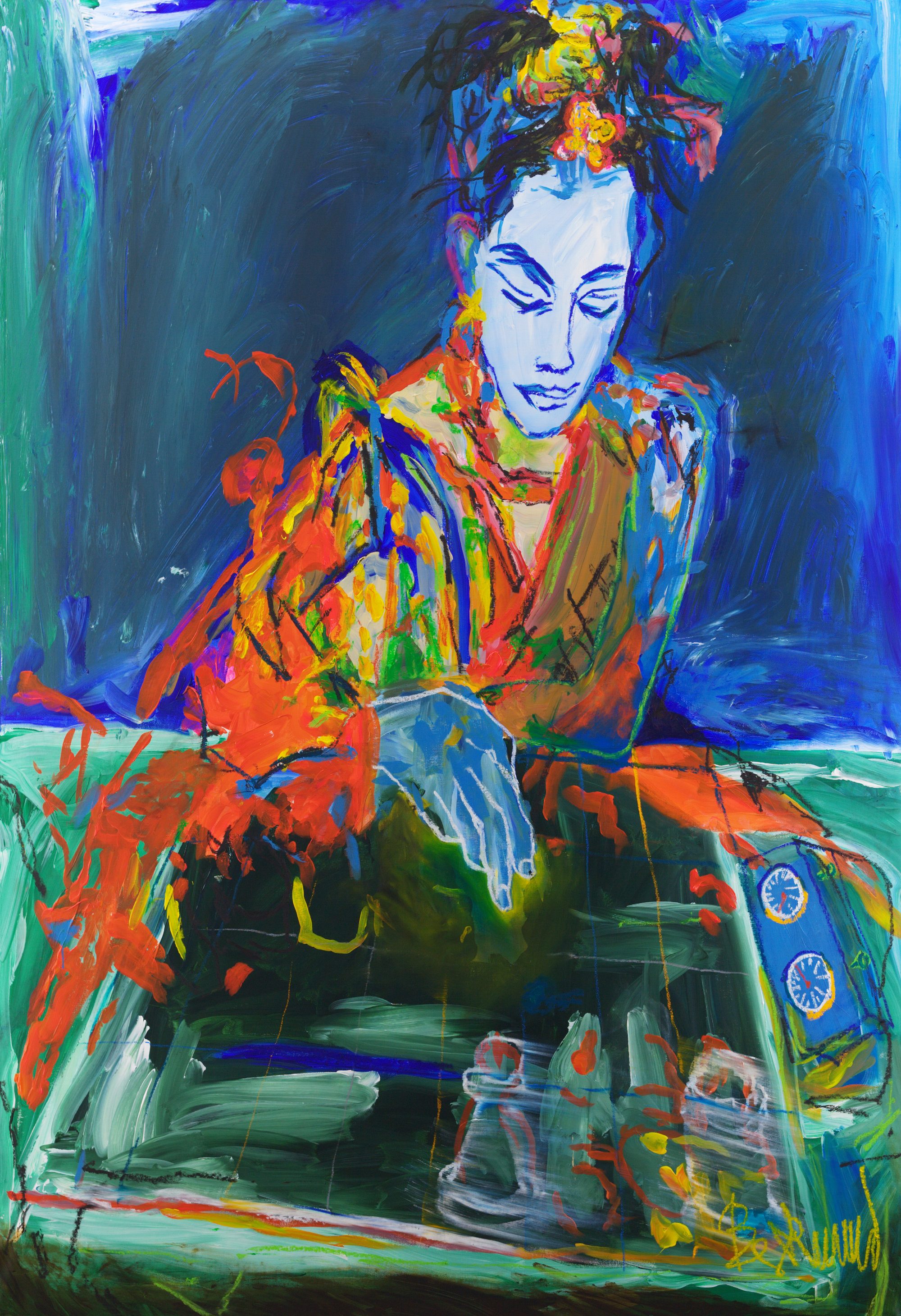
Chess is the only game with a perfect memory. A match played in London in 1851 — the one chess players still call the Immortal Game — can be replayed tonight, move for move, exactly as it happened.
Everything else is lost. Nobody wrote down how long the players' hands hovered before they touched a piece, or what they were thinking. The notation keeps the moves and forgets the people. Trace does the opposite.
A condition, not a story
A young woman sits at a chess table, head bowed, eyes lowered almost to closing. Her open hand hangs above the board and does not touch anything. She does not look like someone calculating. She looks like someone listening.

A still life in disguise
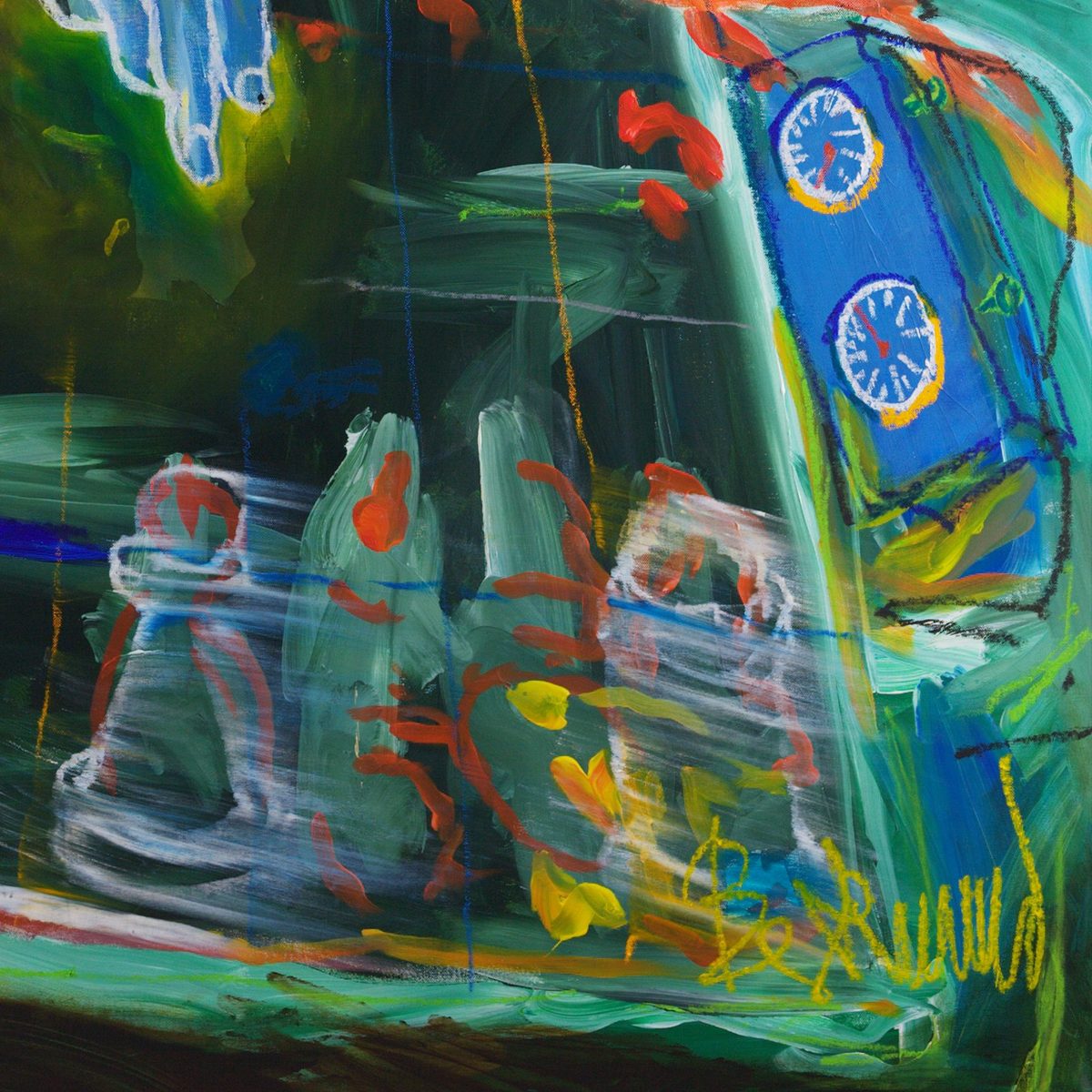
Look at what is on the table. The chess pieces are barely there — grey and white outlines on dark green, transparent as breath on a cold window. Beside them stands a clock. And in the woman's hair there are flowers.
A timepiece, fresh flowers and glass: for centuries painters set exactly these objects on a table to say one thing — everything passes. The genre is called vanitas. Trace carries all three of its attributes and hides them inside a game. Only the skull is missing. Late-medieval painters knew who waited across the chessboard and painted Death in the opposite chair. Here there is no opponent at all. The only other presence at the table is the clock.
The clock that measures hesitation
A chess clock has two faces, and only one of them ever runs: the one belonging to the player who has to decide. It is the only clock ever built that does not measure how long you live — only how long you hesitate.
Under the rules of chess, a piece that is touched must be moved. As long as her hand hovers, every possibility is still alive. It is the most fleeting moment in any game, perhaps in any life, and it is the one moment no notation ever records. The painting keeps it. The flowers stay fresh, the glass stays whole, and a painted clock can run for ever without her time running out.
The same rule governs the way the canvas is made. The deep blue night, the mint-green table, the dark board and the orange and ochre masses of the robe are laid in first, in coarse, broad brushstrokes that settle nothing precisely. The drawing arrives afterwards and sits on top of that ground: the lowered eyes, the white contour of the hand, the glass pieces, the two dials of the clock. Once an oil-stick line has touched the canvas, it counts. Freedom below, precision above, and no scraping back — the image is built forward, like every figurative work in this series. Collectors who know the abstract series will recognise the inversion: there the surface is built over months and cut back into; here the line is laid on top and stays there.
A counterpart to Gambit
Trace shares its format, its table and its game with Gambit from the same series. In Gambit a young man looks up from the board and straight at the viewer; in Trace a young woman looks down and does not notice us at all. One painting is about the opponent, the other about time. At two metres high, both are built to hold a wall on their own — and to complete each other side by side.
Made by a real person — not AI
Like every work in the studio, Trace is an original, one-of-a-kind painting, made by hand by a real person, not AI. The flaring orange sleeve, the fogged glass of the pieces, the faint lines of the board — all of it is intentional, and all of it is itself a trace: the record of a human hand working in front of a canvas two metres tall.
Trace, 2026. Acrylic and oil stick on canvas, 200 × 150 cm (height × width). Signed on the front and the back. Part of the figurative works.
This painting belongs to Claus Bertermann’s 2026 figurative series — large-format works in acrylic and oil stick in which the drawn layer always lies on top of the paint, never in it.