Nocturne (2026) — The Performance Nobody in the Room Will See
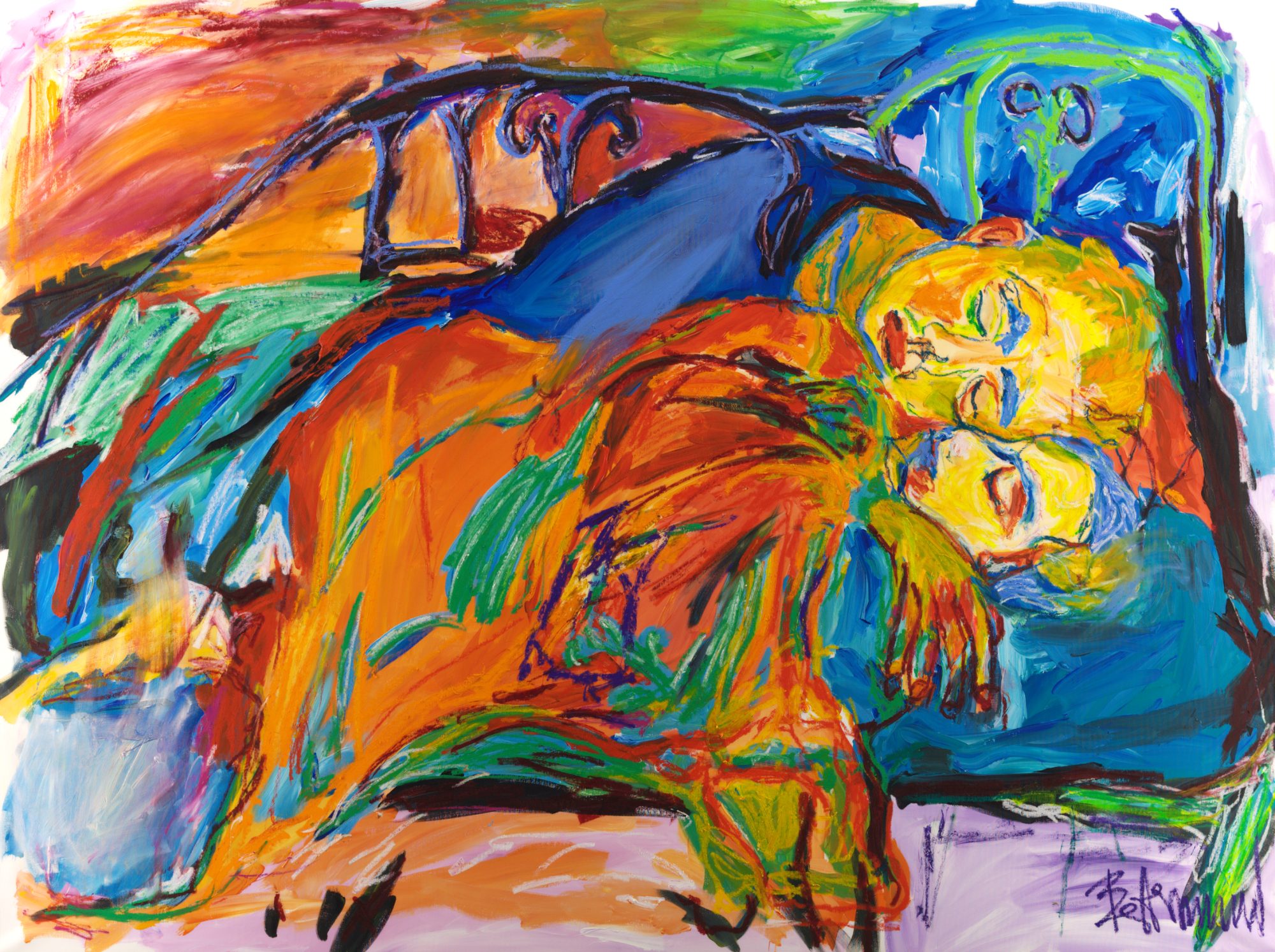
Every couple exists in two versions. The daytime version negotiates: whose turn it is, who said what, who forgot to call back. Two people, two positions, and a running score neither of them admits to keeping.
The night-time version has never heard of any of this. Nocturne is a painting of that version.
A condition, not a story
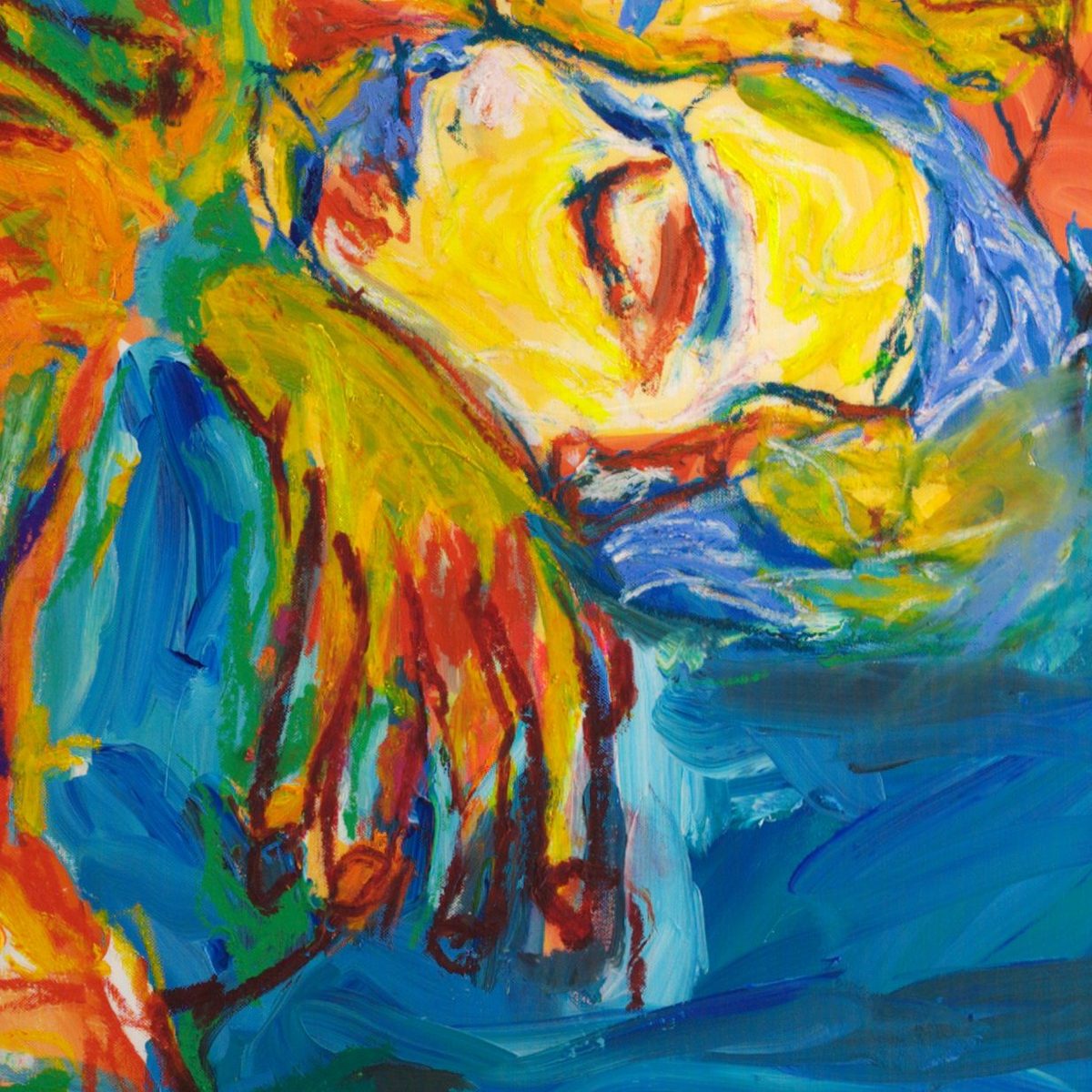
Two people asleep in the same bed. Somewhere after midnight their heads have drifted together on the blue pillow until the painting has made them almost the same face: the same closed eyes drawn in the same blue line, the same yellow light on the skin, the same small red mouth. Nothing happens. Nothing needs to.
Nobody in the room is awake
This is the most tender moment in their relationship, and it has never had a witness. It only exists while both of them are unconscious. The second either one wakes, it is over, and by breakfast the negotiations resume. The two people in this bed will never see what they look like at three in the morning.
Only the viewer will. A nocturne is music written for the night, and this one is played to an audience of exactly one — while the performers sleep through their best work.
Look at the long red strand running down across the blanket. Where it crosses the orange, there is no telling any more whether it is her hair or his hand resting on her. The painting does not decide, and neither do they.
The only thing awake is the bed
The iron frame, with its scrolls and curls, is the one hard, cold, precisely drawn object in the picture. It arches over the two sleepers in violet-blue oil stick like a bracket around a sentence it is not allowed to interrupt.
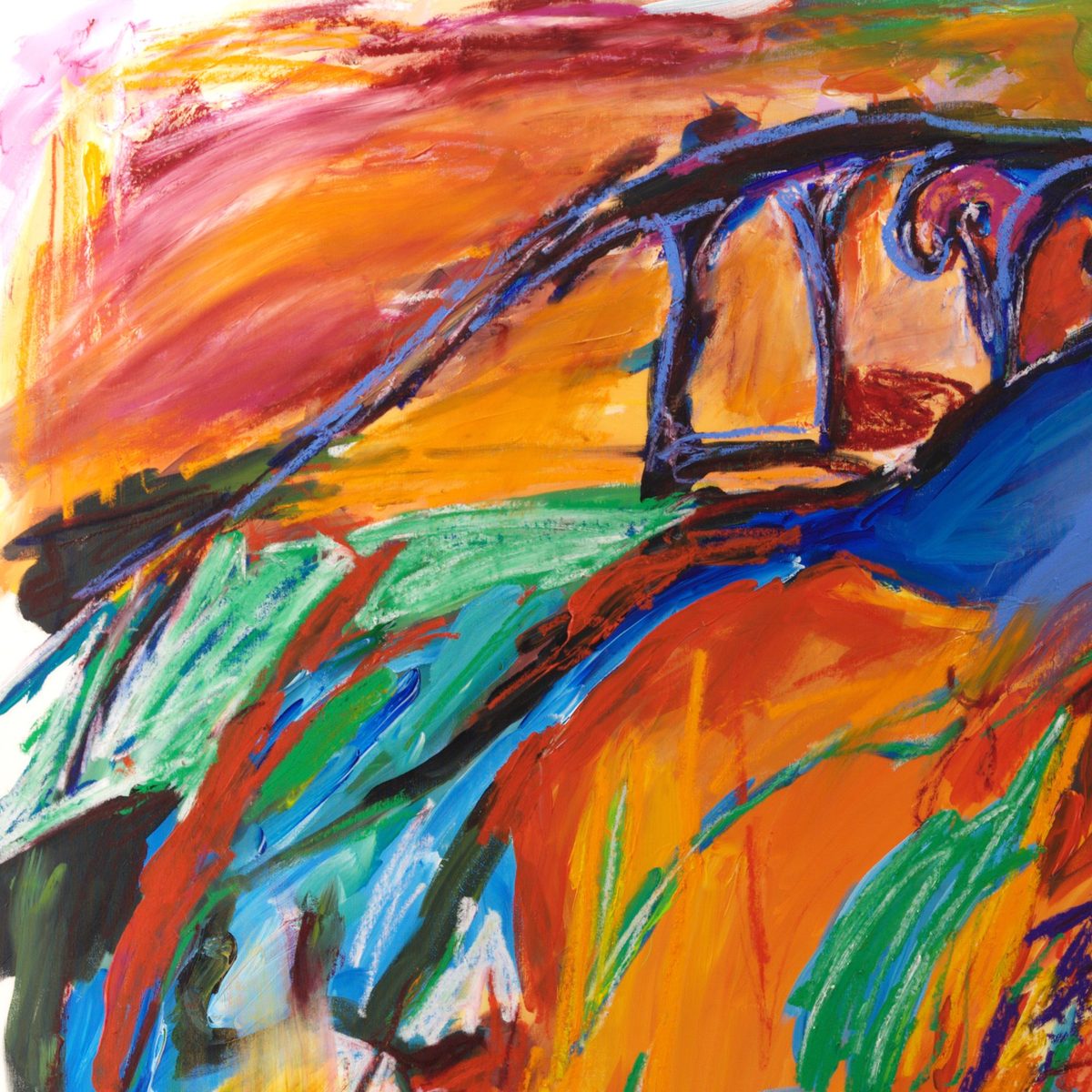
Under that drawing the paint does something else entirely. The blanket, the pillow, the magenta and cobalt walls and the lilac floor are laid in first, in coarse, broad brushstrokes that settle nothing precisely and keep the movement of the arm visible. The drawing arrives afterwards and sits on top of that ground, cutting across it instead of following it. Freedom below, precision above, and no scraping back — the image is built forward, like every figurative work in this series. Collectors who know the abstract series will recognise the inversion: there the surface is built over months and cut back into; here the line is laid on top and stays there.
A loud night
Night pictures are supposed to be blue and hushed. Nocturne is one of the loudest canvases in the series: orange, vermilion and cadmium yellow sit exactly where the sleepers are least conscious, as if the painting were showing what is going on inside the sleep rather than the dark room around it.
Made by a real person — not AI
Like every work in the studio, Nocturne is an original, one-of-a-kind painting, made by hand by a real person, not AI. The running colour, the scrolled iron, the loose strands across the blanket — all of it is intentional, and all of it is the record of a human body working fast in front of a canvas two metres wide.
Nocturne, 2026. Acrylic and oil stick on canvas, 150 × 200 cm (height × width). Signed on the front and the back. Part of the figurative works.
→ View Nocturne in the gallery
This painting belongs to Claus Bertermann’s 2026 figurative series — large-format works in acrylic and oil stick in which the drawn layer always lies on top of the paint, never in it.