Sidekick Two (2026)
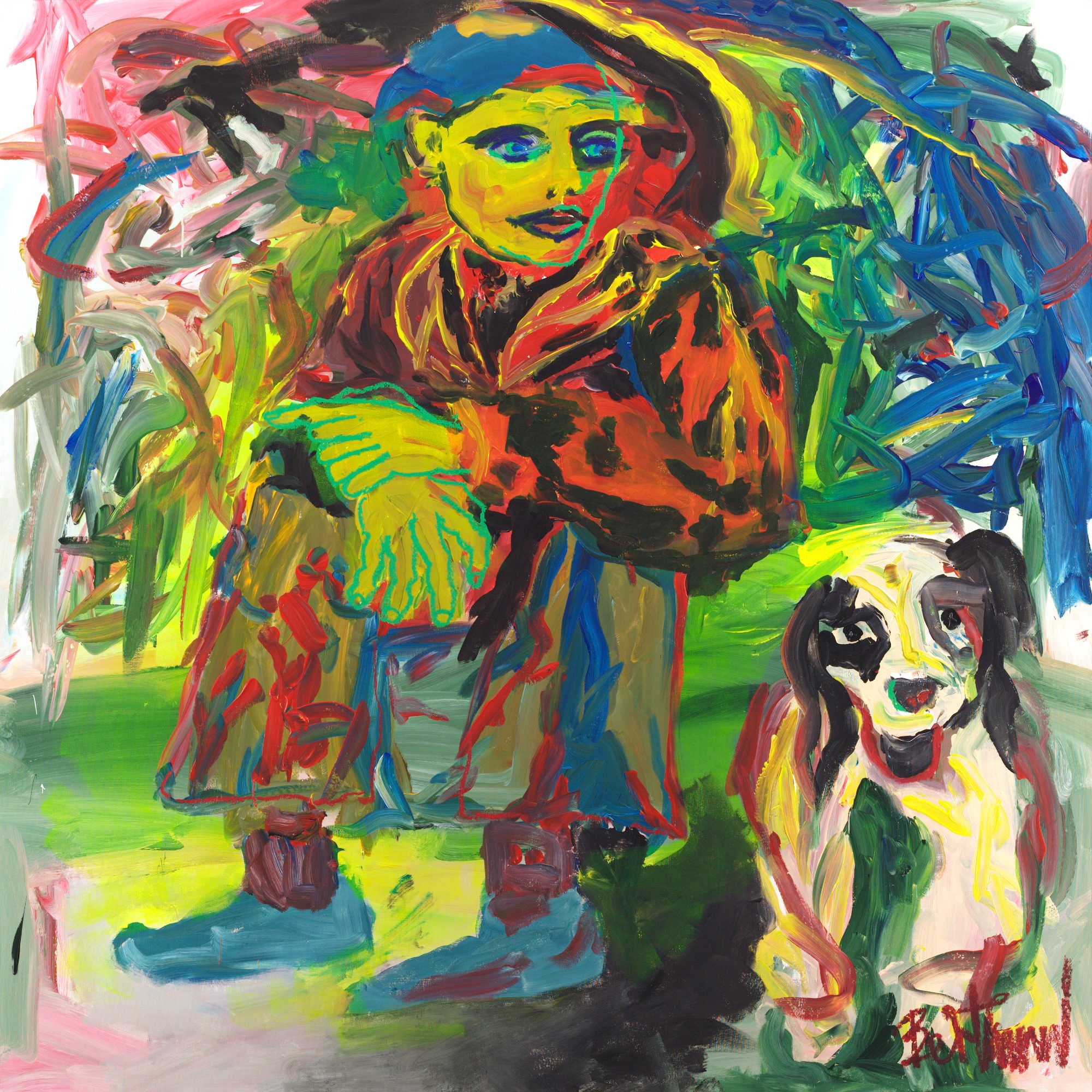
Sequels are supposed to be worse. This one is where the relationship finally works.
A condition, not a narrative
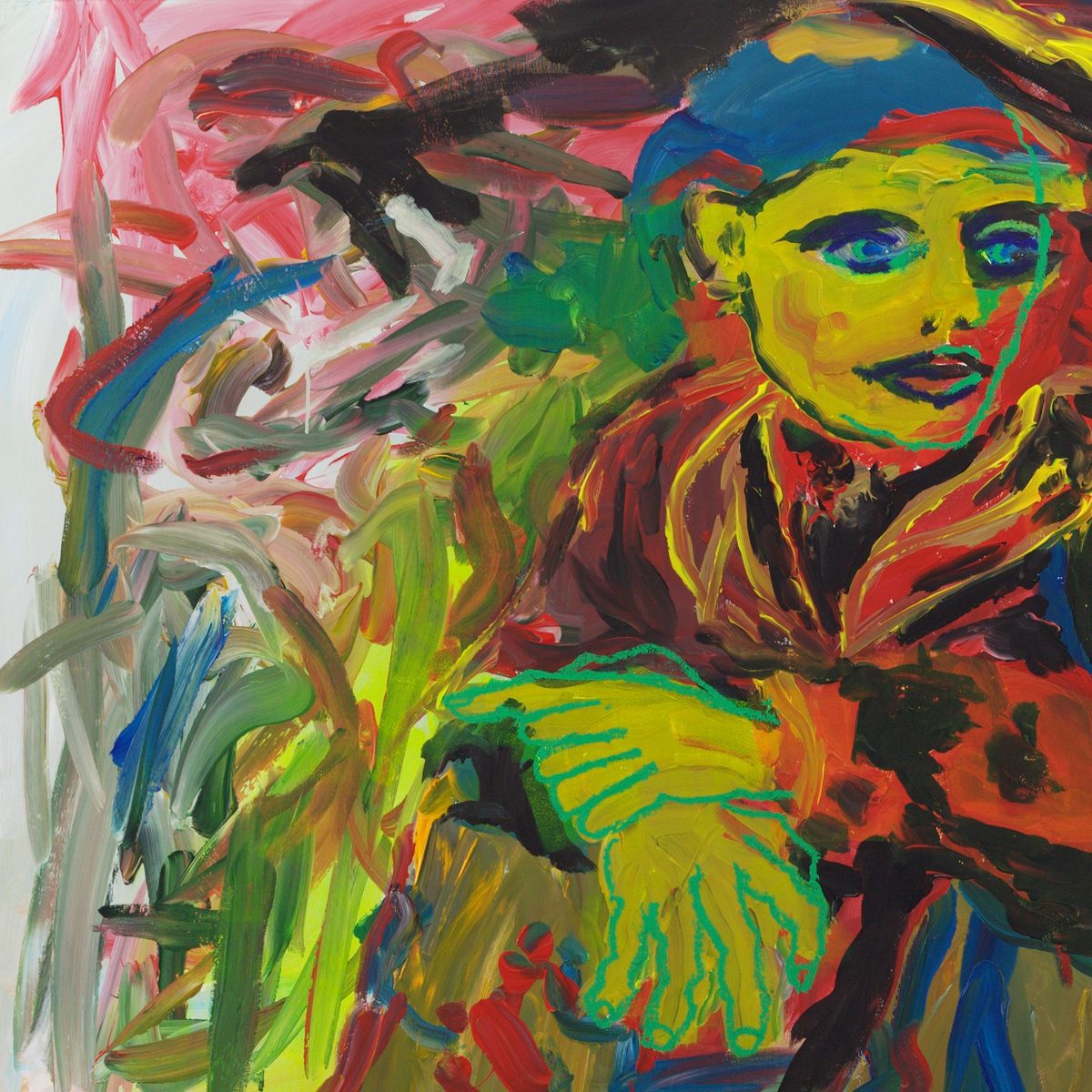
In the first painting there was a lead — a thin yellow line running from the man's hand to the dog's collar — and the dog spent the whole picture looking up at a man who was looking somewhere else. Here, look at what is gone. There is no lead. Nothing connects the two bodies. The man's hand hangs open at his side, drawn in bright green over yellow, fingers spread wide, and it is unmistakably empty: no treat, no lead, no leverage, nothing on offer.
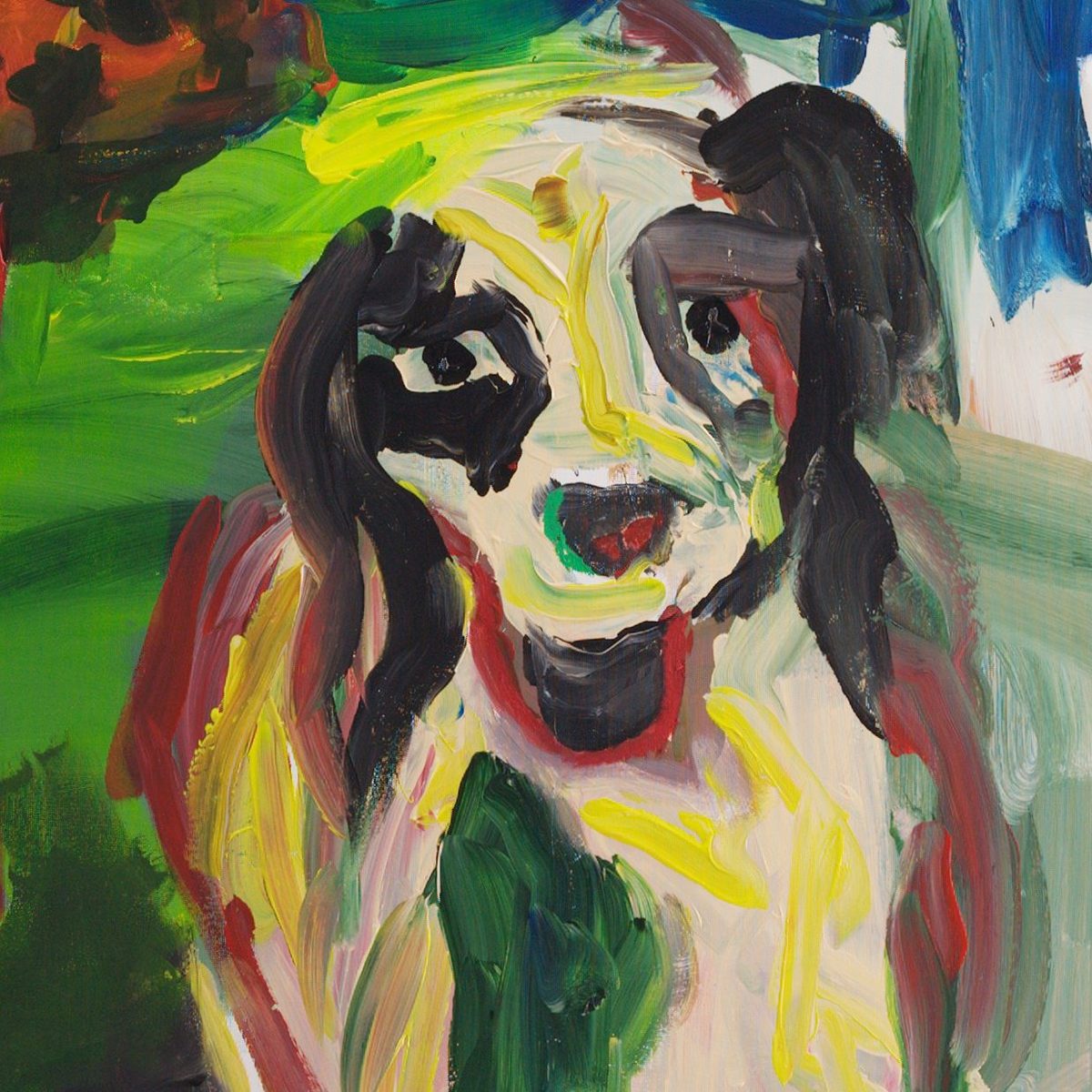
The dog stays anyway. He sits at the right edge, cream and black with long ears, upright and composed, and he is not looking up at anybody — he is looking out, in the same direction as the man, the two of them squarely facing whoever has come to look. In the first canvas one of them posed and the other adored. Here they are simply being photographed side by side, in the same light.
The sequel where the sidekick gets promoted
That is the whole promotion: the sidekick has stopped auditioning. Whatever was being negotiated in the first canvas got settled somewhere off-frame, between the two paintings, and what remains is the unglamorous thing that comes after loyalty has been proven — two figures standing in tall grass, neither needing the other to prove anything.
Painted fast, drawn in oil stick
Sidekick Two belongs to Bertermann's figurative method, the reverse of his abstract discipline. Broad fields of acrylic go down fast and loose, and the figure, the hand and the dog are then drawn straight over that ground in oil stick. The contour lines stay independent of the paint underneath; they sit on top of it and cut through the colour rather than follow it.
The background here goes further than in any recent figurative canvas — a thicket of hot pink, white, cobalt, teal and sap green closing in from every side, near enough to pure abstraction that the two legible bodies have to hold the picture on their own. The world is chaos. The pair at its centre are perfectly still.
Built forward, not scraped back
Collectors who know the abstract series will feel the difference at once. In the abstracts, layers are applied and scraped back — the image arrives by removal, like sediment. Sidekick Two is built the opposite way: forward only. Coarse acrylic first, decisive oil-stick contour on top, and the anatomy pushed past realism so that both figures carry weight without either dominating the other.
Made by a real person — not AI
Like every work in the studio, Sidekick Two is an original, one-of-a-kind painting, made by hand by a real person, not AI. The breaks in the oil-stick line, the collisions of wet colour, the small irregularities of the surface — all of it is intentional, and all of it is the record of a human body moving in front of a canvas over a metre and a half square.
Sidekick Two, 2026. Acrylic and oil stick on canvas, 160 × 160 cm (height × width). Signed on the front and the back. Part of the figurative works.