Geborgenheit (Eigentlich, Nr. 2) (2026): One Sleeps, One Keeps Watch
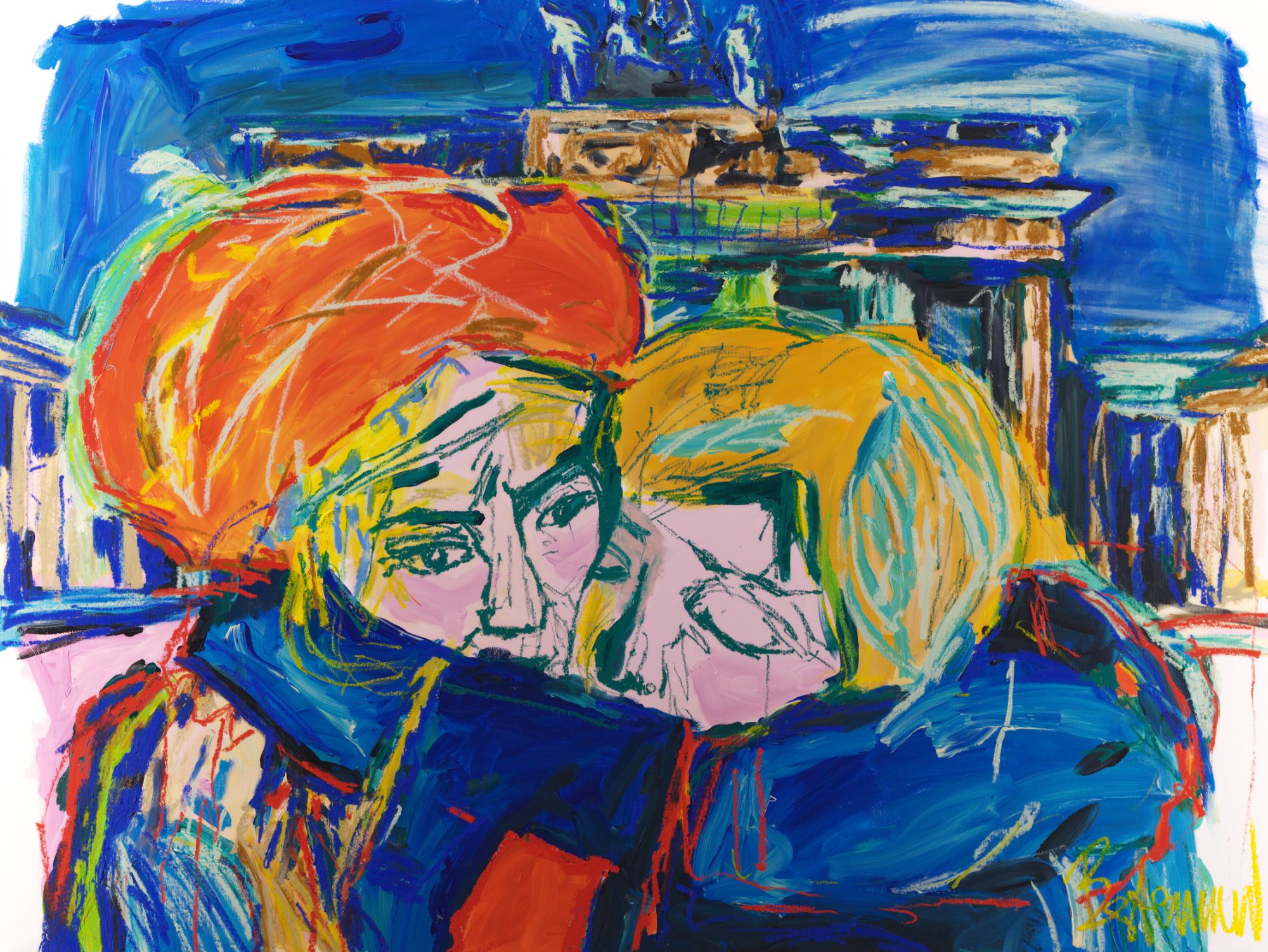
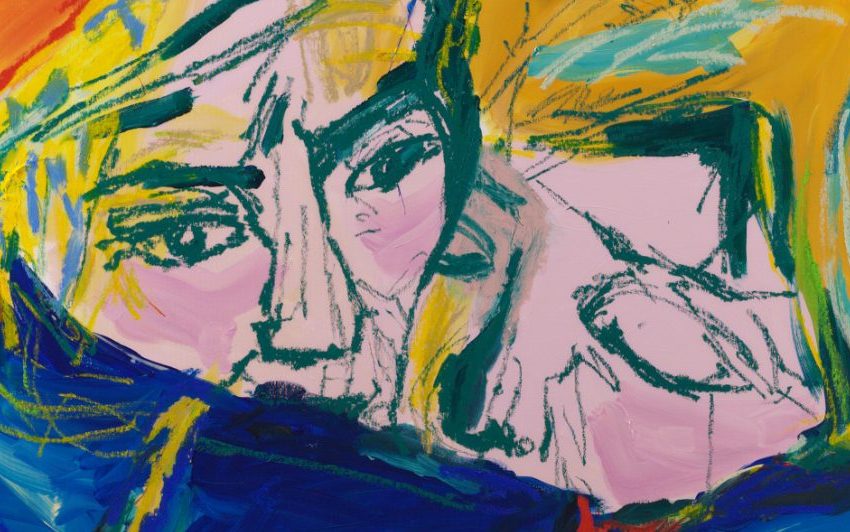
Two young women hold each other in front of the Brandenburg Gate, so closely that their faces almost merge. One has closed her eyes. The other looks straight at you, wide awake.
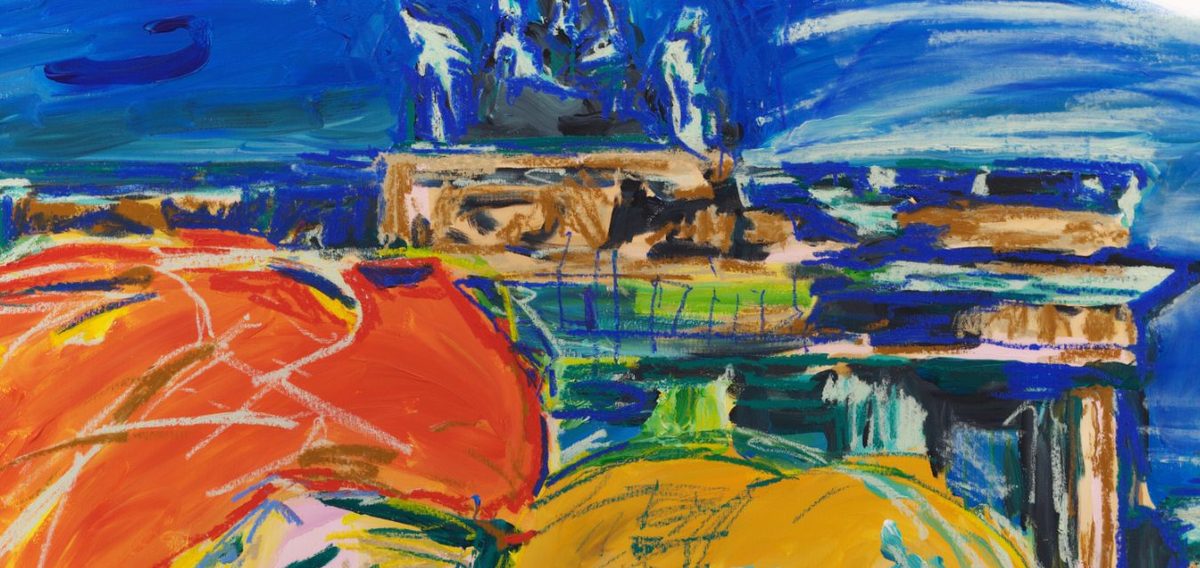
Above them, sketched in a few strokes of dark blue and white, stands the Quadriga.
A condition, not a story
Geborgenheit does not tell you who these two are or what brought them here. It shows a state: one woman resting in complete safety, the other holding her and keeping watch. Comfort and vigilance, in a single embrace.
A country, anaesthetised
The painting is the second work of Eigentlich, Claus Bertermann’s portrait of Germany seen from his studio in Spain. Its subject is an ambivalence: admiration for a great country capable of almost anything, and bewilderment at how quiet it has become — as if anaesthetised, wrapped so tightly in comfort, caution and rules made far away that it has drifted into sleep.
Three meanings of one word
Geborgenheit is one of those German words that no other language quite holds: the deep feeling of being safe, sheltered and held. It comes from the old verb bergen, which carries three meanings at once. It means to shelter. It means to hide — verborgen, hidden. And it means to rescue: a Bergung is what Germans call bringing someone down from a mountain or out of a wreck.
This embrace holds all three. It shelters, it hides, and — if you look into the eyes of the woman who is awake — it rescues. She is not lulling her friend to sleep. She is holding her until she wakes up.
Freedom below, precision above
The picture is built in two separate moves. First the ground: the deep blue sky, the ochre and brown of the gate, the blazing orange and golden hair, the ultramarine of the two coats, laid in with coarse, broad brushstrokes that settle nothing precisely. Then the drawing, on top of that ground: the open eyes of one woman and the closed eye of the other in dark green, the brows, noses and mouths, the red and yellow lines of the coats and the columns of the gate. The line never sinks into the paint; it stays on top. Like every figurative work in this series, the image is built forward, never scraped back — the exact inversion of the abstract series, where surfaces are built over months and cut back into.
An architect’s scale
At 150 × 200 cm the two heads are far larger than life, and the gate behind them becomes a stage set. Bertermann, who holds a Master’s degree in Architecture, uses that scale so that you do not watch the embrace from a distance — you stand inside the gaze of the woman who is keeping watch.
Made by a real person — not AI
Like every work in the studio, Geborgenheit is an original, one-of-a-kind painting, made by hand by a real person, not AI. The blazing hair, the deep blue coats, the two faces drawn in a few sure strokes — all of it is intentional, and all of it is the record of a human hand working fast in front of a canvas two metres wide.
Geborgenheit (Eigentlich, Nr. 2), 2026. Acrylic and oil stick on canvas, 150 × 200 cm (height × width). Signed on the front and the back. Part of the figurative works. The series opened with Europa (Eigentlich, Nr. 1).
→ View Geborgenheit (Eigentlich, Nr. 2) in the gallery
This painting belongs to Claus Bertermann’s 2026 figurative series — large-format works in acrylic and oil stick in which the drawn layer always lies on top of the paint, never in it.